
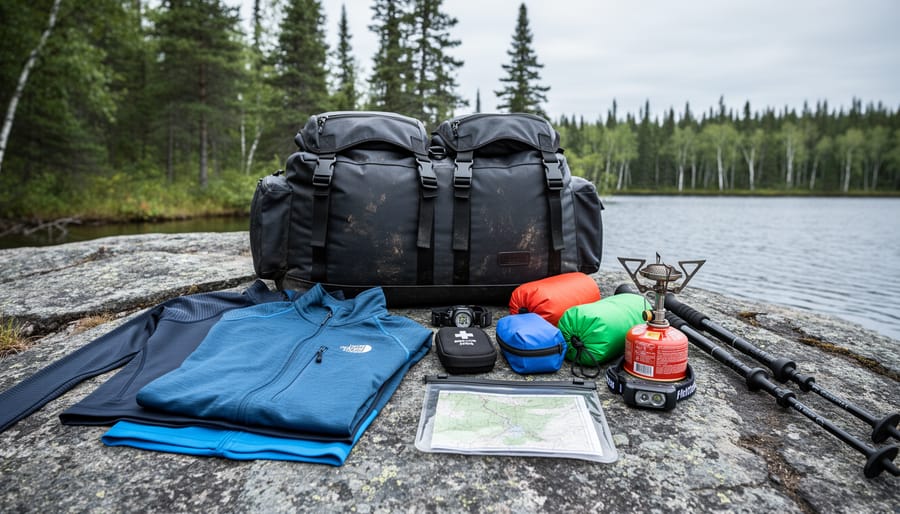
How to Build Your 8 Day Trip Packing List for Northern Ontario Wilderness
Packing for an eight-day wilderness journey in Northern Ontario requires a methodical approach that balances essentials for survival, comfort across unpredictable weather, and respect for the land you’ll traverse. The core strategy involves layering clothing systems, waterproofing everything, and prioritizing multi-use gear that can handle the boreal forest’s humidity, sudden temperature swings, and shield lake country terrain. Unlike southern escapes where you can buy forgotten items, the remote reaches of this region demand complete self-sufficiency from day one.
The landscape here doesn’t forgive oversight. You’ll experience morning frost giving way to afternoon sun, blackflies thick enough to cloud your vision, and portages where every ounce in your pack matters. A well-planned checklist accounts for these realities while keeping your load manageable across those inevitable carries between waterways. This means selecting gear that serves double duty and understanding which traditional items you can safely leave behind.
Northern Ontario prep extends beyond simply throwing clothes in a duffel. The Anishinaabe peoples have traveled these watersheds for millennia with minimal possessions, a lesson in efficiency modern adventurers would be wise to study. Your packing list should honor that wisdom while incorporating contemporary materials that reduce environmental impact and increase safety margins.
The following guide breaks down exactly what belongs in your pack, organized by function and verified against real conditions reported by travelers throughout 2026. You’ll learn which items prove indispensable, what gear performs best in this specific ecosystem, and how to verify you haven’t missed critical components before you’re too far from civilization to turn back.
Essential Gear and Materials for Northern Ontario’s Wilderness
Navigation and Communication Tools
Cell service vanishes within an hour of leaving most Northern Ontario towns, making navigation and communication tools your lifeline in the backcountry. You’re entering a landscape where wrong turns can add days to your journey and emergencies require self-rescue until help arrives.
Start with redundant navigation: carry both a waterproof topographic map of your specific area and a handheld GPS device with fresh batteries. The Canadian Topographic Series maps at 1:50,000 scale show the terrain detail you need for route-finding through dense forests and across unmarked lakes. Your GPS provides precise coordinates but can fail when batteries die or devices get damaged during portages.
A satellite communicator like an inReach or SPOT device enables two-way messaging and SOS alerts where phones become expensive paperweights. These devices connect to overhead satellites rather than ground-based towers, functioning anywhere you can see sky. For an 8-day trip deep in wilderness, this technology transforms from luxury to necessity. Test everything before departure and pack spare batteries in waterproof bags. Know how to use your compass for basic navigation when technology fails completely.
Water Purification and Treatment Systems
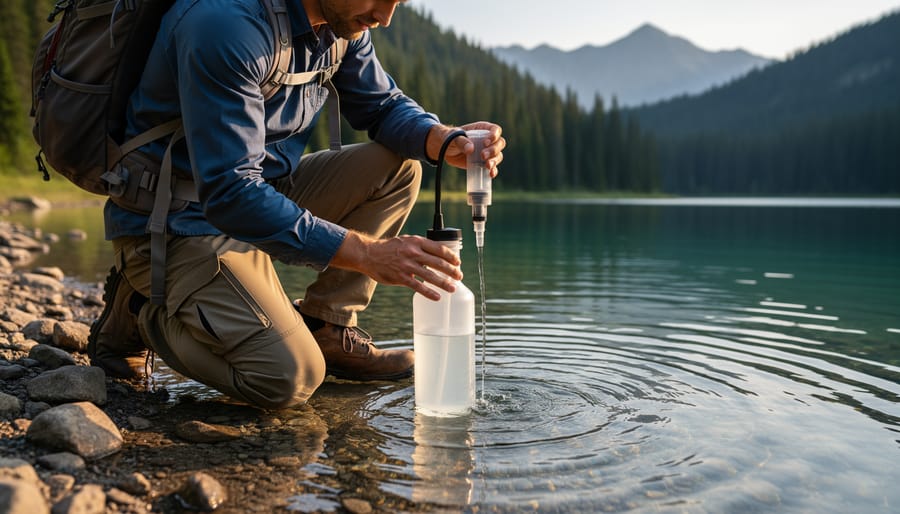
Northern Ontario’s countless lakes and rivers provide abundant water sources, but treating that water properly is non-negotiable for your eight-day journey. You’ll need a reliable system that balances weight, speed, and effectiveness against the region’s specific waterborne threats.
Pump or squeeze filters with a 0.2-micron rating remove bacteria and protozoa effectively. Popular choices like the Katadyn Hiker or Sawyer Squeeze weigh under a pound and process several liters quickly at camp. For added protection against viruses, combine filtration with purification tablets containing chlorine dioxide. These tablets require 30 minutes to four hours depending on water temperature, so fill bottles during breaks to have treated water ready when you need it.
Boiling remains the most reliable backup method. Bring water to a rolling boil for one minute at Northern Ontario’s elevations. A lightweight titanium pot serves double duty for cooking and emergency purification. Pack at least two treatment methods since equipment failures eight days from civilization create dangerous situations.
UV light purifiers like the SteriPEN work well in clear water but struggle with the tannin-stained lakes common across the Shield. Test your chosen system before departure and carry replacement parts for filters, spare batteries for UV devices, and extra tablets as insurance.
Safety-Critical Items You Cannot Skip
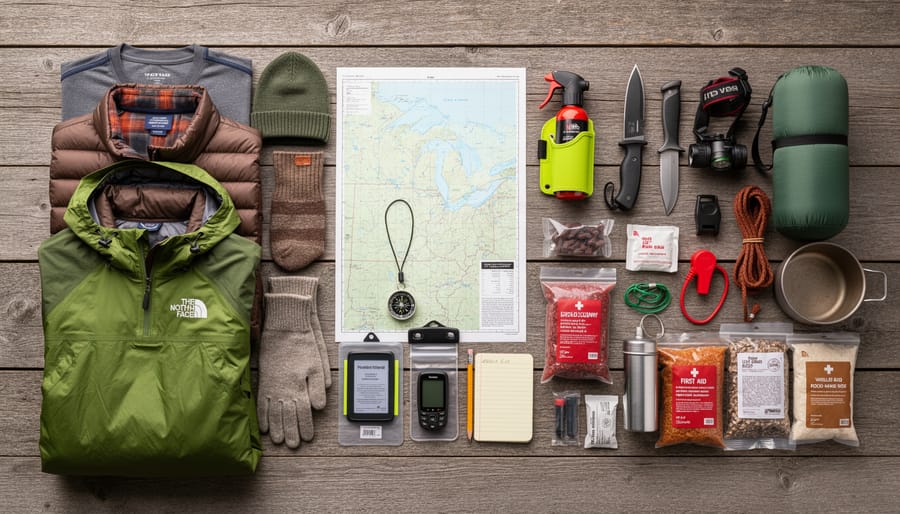
First Aid and Emergency Medical Supplies
Your first aid kit becomes your portable medical facility when you’re hours from professional help. Start with a waterproof case large enough to hold supplies for eight days, organized so you can find critical items quickly in an emergency.
Wound care essentials include adhesive bandages in multiple sizes, sterile gauze pads, medical tape, butterfly closures for deeper cuts, and antibiotic ointment. Add blister treatment supplies, moleskin, Second Skin, and fabric bandages, because foot injuries can end a trip faster than almost anything else. Pack tweezers for splinter removal and irrigation syringes for cleaning wounds with treated water.
Medications and treatments should address Northern Ontario’s specific challenges. Include antihistamines for severe insect reactions (blackflies and mosquitoes are relentless), pain relievers like ibuprofen and acetaminophen, anti-diarrheal medication, and any personal prescriptions with extra days built in. Add hydrocortisone cream for rashes and calamine lotion for bite relief.
Cold-related items are critical even in summer, when nighttime temperatures can drop dramatically. Pack an emergency blanket, hand warmers, and know the signs of hypothermia as part of your overall wilderness safety plan. Include instant cold packs for sprains or heat-related swelling.
Add tensor bandages for joint support, safety pins, medical gloves, and a small first aid manual. Consider a satellite communication device’s location in your kit, if you need evacuation, you’ll want it accessible fast.
Bear Safety and Wildlife Deterrents
Northern Ontario’s boreal forests are home to healthy black bear populations, and an 8-day trip means you’ll almost certainly be traveling through their territory. Bear spray should be your first line of defense, carry at least two canisters with a minimum 7.9-ounce capacity and practice drawing from the holster before you leave. Keep one can on your hip, accessible in two seconds, not buried in your pack.
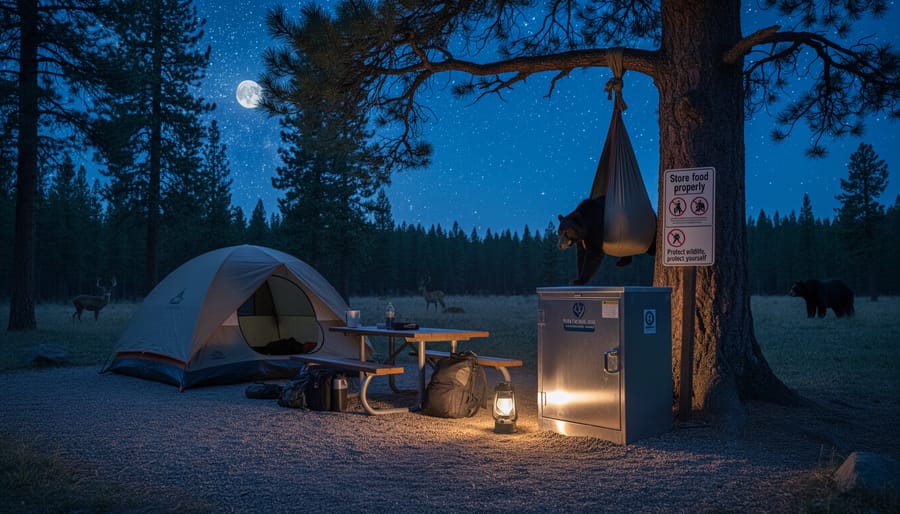
Food storage demands equal attention. Hard-sided bear canisters remain the gold standard, though they’re heavy for 8 days of provisions. Many Northern Ontario backcountry travelers use Ursack bear-resistant bags as a lighter alternative, securing them to trees at least 100 meters from camp. Never store food, toiletries, or scented items in your tent.
Noise makers help you avoid surprise encounters on the trail. Bear bells work for dense forest where visibility drops, but your voice works better, call out regularly near streams where running water masks your approach. Travel during daylight hours when possible, as bears are most active at dawn and dusk. If you spot a bear, don’t run. Make yourself large, speak calmly, and back away slowly while keeping the animal in view.
Your 8-Day Packing Strategy: Step-by-Step Process
Days 7-5: Gather and Inspect Core Equipment
A week before departure, pull every piece of core equipment from storage and spread it out where you can see it all. Start with your tent, sleeping bag, backpack, and stove, the items that keep you sheltered, warm, mobile, and fed. Pitch the tent in your yard to check for missing stakes, damaged poles, or seam tape that’s peeling. Inflate your sleeping pad and leave it overnight; a slow leak discovered at home beats a cold night on the ground. Fire up your stove with the fuel you’ll actually carry to confirm burners aren’t clogged and connections seal properly.
This inspection phase catches problems while you still have time to order replacement parts, reseal zippers, or swap out gear entirely. Create a master checklist as you go, noting each item’s condition and what you’ve verified. Cross-reference it against your trip planning notes to ensure nothing’s been overlooked. Replace worn boot laces, test headlamp batteries, and confirm your water filter isn’t cracked from last season’s freeze. This systematic approach transforms packing from frantic last-minute scrambling into a confident, methodical process that honors the seriousness of Northern Ontario’s backcountry.
Days 4-2: Organize Clothing and Personal Items
Three days before departure, shift your focus to clothing and personal care items, the categories where inexperienced packers make the costliest mistakes. Northern Ontario’s weather swings from 25°C summer afternoons to 8°C nights, sometimes within hours, demanding a layering system rather than random clothing choices.
Start with your base layers: two to three sets of moisture-wicking synthetic or merino wool underwear and long underwear. Cotton kills in Northern Ontario’s damp climate. Pack two mid-layer fleeces or synthetic insulated jackets, one for active wear and one for camp. Your outer shell should be waterproof and breathable, sudden rainstorms appear without warning across the boreal forest.
For lower body, bring two pairs of quick-dry hiking pants and one pair of long underwear bottoms. Add three pairs of wool hiking socks, plus one liner sock set for blister prevention. Pack a warm hat, sun hat, and lightweight gloves even in summer.
Personal hygiene products require careful selection to respect the land. Choose biodegradable, unscented soap and toothpaste, scented products attract bears and pollute waterways sacred to indigenous communities. Bring a menstrual cup or reusable products rather than disposables you’ll need to pack out. Your toilet kit should include a small towel, toothbrush, sunscreen (reef-safe formula), and lip balm.
Lay everything out visually to spot duplicates or gaps before final packing.
Day 1: Final Pack Assembly and Weight Check
The night before departure, lay out every item you’ve gathered over the past week. Start with your heaviest gear, tent, sleeping bag, food barrel, and position these closest to your back and centered between your shoulder blades. This keeps the weight stable on portages and prevents the pack from pulling you backward.
Pack your rain gear and an insulating layer at the very top or in external pockets where you can grab them in thirty seconds. Northern Ontario weather shifts fast, and fumbling through your entire pack while mosquitoes swarm teaches hard lessons. Place your first aid kit, headlamp, and water filter in accessible side pockets.
Hoist the loaded pack and walk around your house for ten minutes. Does the hip belt carry most of the weight? Can you bend forward without losing balance? A properly loaded pack should feel like it’s trying to stand you upright, not tip you over. Adjust strap tension until the load rides comfortably on your hips, not your shoulders.
Weigh your pack. For an 8-day trip, aim for 35-45 pounds including food and water. Anything over 50 pounds signals you’re carrying luxuries you’ll resent by day three.
Clothing Layers for 8 Days in Northern Ontario
Northern Ontario’s temperature can swing 30 degrees Celsius between midday sun and midnight frost, even in summer. Your clothing system needs to adapt without weighing down your pack for eight days in the wilderness.
Base Layers: Moisture Management Against Your Skin
Pack three merino wool or synthetic base layer tops and two bottoms. Merino naturally resists odor, letting you wear each top 2-3 days before switching. Avoid cotton entirely, it holds moisture and loses all insulating value when wet, a dangerous combination during cold northern nights. Bring one lightweight set for warm days and one midweight for cooler conditions.
Insulating Mid-Layers: Trapping Heat
A fleece jacket or synthetic insulated vest serves as your temperature-adjustable layer. Choose synthetic over down for Northern Ontario’s humidity, synthetic insulation maintains warmth when damp, while down clumps and fails. This layer stays accessible at the top of your pack since you’ll pull it on frequently as temperatures drop after sunset.
Outer Shell: Wind and Rain Protection
A waterproof-breathable rain jacket with pit zips is non-negotiable. Northern Ontario’s weather systems move fast across the boreal forest, turning sunny mornings into afternoon downpours. Pack matching rain pants, lightweight ones pack small and protect you during portages or when setting up camp in rain. Seam-sealed construction prevents water creeping through stitching during extended storms.
Extremities: Hands, Head, and Feet
Bring a warm toque and lightweight gloves even in July. Northern Ontario nights regularly drop to 5°C, and our cold-weather tips emphasize protecting extremities where heat loss happens fastest. Pack three pairs of hiking socks and one warmer pair for camp. A wide-brimmed hat provides sun protection during long northern daylight hours.
Insect Defense Clothing
A lightweight long-sleeve shirt with insect-shield treatment becomes essential during blackfly season (May-July). Consider pants with similar treatment. A head net weighs almost nothing but provides sanity when bugs are thick. These items let you enjoy evening hours without retreating to your tent.
Your eight-day clothing system should fit in one compression sack, leaving room for the critical gear that keeps you safe in this magnificent, demanding landscape.
Food and Cooking Equipment for Extended Wilderness Stays
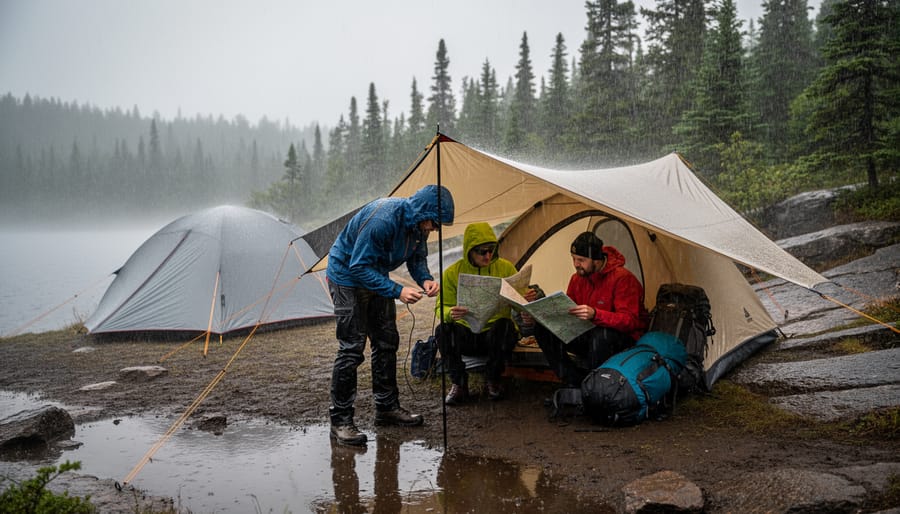
Feeding yourself for eight days in Northern Ontario’s backcountry requires a different mindset than car camping or weekend trips. You’ll want meals that provide enough calories for long days of paddling or hiking, aim for 3,000 to 4,000 calories daily, while keeping pack weight manageable. Dehydrated and freeze-dried meals form the backbone of most wilderness meal plans because they’re light and need only boiling water, but supplement them with energy-dense foods like nuts, dried fruit, peanut butter, and hard cheeses that won’t spoil without refrigeration.
Your cooking system should be simple and reliable. A lightweight canister stove works well for summer trips, though a small wood-burning stove lets you use fallen twigs and reduces fuel weight if fire bans aren’t in effect. Pack your cookware strategically:
- One pot with lid, 1-1.5 liter capacity, doubles as bowl for eating
- Insulated mug that keeps coffee hot and serves as a second bowl
- Long-handled spoon or spork, preferably titanium for durability
- Small knife for food prep, not your main survival blade
- Lightweight stuff sack to organize food for each day
Bear-safe food storage isn’t optional in Northern Ontario. Hard-sided bear canisters offer the best protection and are required in some parks, though they’re heavy and bulky. Many paddlers prefer using designated food-hanging cables at campsites or bringing rope to hang a bear bag at least four meters high and one meter from the tree trunk. Never keep food, toiletries, or scented items in your tent.
Respect for the land shapes how you cook and clean. Indigenous communities have sustained themselves here for thousands of years through careful stewardship. If you forage for berries or fish, take only what you’ll eat and learn which species are abundant versus those needing protection. Wash dishes at least 70 meters from water sources using biodegradable soap sparingly, and scatter strained food particles widely rather than dumping them in one spot. Pack out everything you packed in.
Region-Specific Items for Northern Ontario Conditions
Northern Ontario demands gear choices that directly address its distinct challenges: relentless insects during summer months, unpredictable weather patterns, extended daylight hours, and the cultural responsibility that comes with traveling through territories with deep indigenous heritage.
Insect Protection Beyond the Basics
Standard bug spray won’t cut it here. Pack a full head net for blackfly season (late May through early July), when these tiny insects swarm in numbers that can make outdoor activities genuinely miserable without proper protection. Choose repellent with 30% DEET or picaridin, and bring enough for multiple daily applications over eight days. Permethrin-treated clothing adds another layer of defense, particularly for your shirt collar and pant cuffs where blackflies typically attack.
Mosquito season follows immediately after, lasting through August. A tent with no-see-um mesh becomes critical, as does a screened cooking area or bug jacket for meal preparation.
Weather Protection for Sudden Storms
Northern Ontario’s weather can shift from sunny to torrential within an hour. Pack a waterproof shell jacket and pants in a readily accessible pocket, not buried in your pack. Choose breathable fabrics rather than basic plastic rain gear, since you’ll likely wear these layers while paddling or hiking, not just standing still.
Sun Defense for Long Northern Days
Summer brings 16-hour days this far north. Bring high-SPF sunscreen, a wide-brimmed hat with a chin strap (wind on open water is constant), and UV-blocking sunglasses with a retention strap. Reflective glare off lakes intensifies sun exposure significantly.
Items Honoring Indigenous Lands
Carry a small tobacco pouch for traditional offerings if you plan to harvest any plants or seek permission to camp on certain sites. Research which First Nations’ territory you’re entering beforehand and pack any required permits or documentation showing you’ve contacted band offices when necessary.
Final Pack Check and Weight Verification
With your gear assembled and packed, the final 24 hours before departure demand a systematic verification process. This isn’t casual double-checking, it’s a structured review that confirms you’re genuinely ready for eight days in Northern Ontario’s backcountry, where forgetting a critical item can turn an adventure into a survival situation.
Start your final verification the evening before departure with a dry run. Put on your fully loaded pack and walk around for 15 minutes. Does one shoulder dig in more than the other? Can you access your water bottle without removing the pack? Is the weight balanced, or does it pull you backward? Adjust straps, redistribute heavy items closer to your spine and higher in the pack, and relocate frequently-needed gear to external pockets or the top compartment. A pack that feels manageable in your living room might reveal serious flaws after 30 minutes on a portage trail.
The night before, perform this methodical check:
- Lay out every item from your checklist on a clean surface and physically touch each one as you confirm it’s present and functional.
- Test battery-powered devices (GPS, headlamp, satellite communicator) to verify full charges and pack spare batteries separately.
- Check medication expiration dates and ensure you have enough for the full eight days plus two extra days as a buffer.
- Verify your first aid kit includes everything from your master list, with special attention to storm precautions like emergency shelter materials.
- Confirm your water treatment system works, pump the filter or test purification tablets to avoid discovering failures on the trail.
- Double-check bear safety items: spray canister isn’t expired, bear bag or canister seals properly, and rope for hanging food is adequate length.
Morning of departure, do one final sweep of your staging area before loading the vehicle, and weigh your pack if possible, aim for no more than 25-30% of your body weight for comfort over multiple days. Walk through your mental map of the first day’s route while confirming you have permits, maps, and emergency contact information where others can find it.
Common Questions About Packing for Northern Ontario
What’s the maximum pack weight I should carry for eight days?
Aim for 25-35 pounds base weight (excluding food and water) for comfort over eight days of wilderness travel. Your total pack weight will climb to 40-50 pounds once you add food for the full trip, especially during the first few days before you’ve eaten through supplies. Northern Ontario’s rugged terrain, rocky portages, uneven forest trails, and steep lakeside approaches, makes every extra pound matter. If you’re new to multi-day trips, stay closer to 30 pounds base weight and prioritize lightweight versions of essential gear over luxury items.
When is the best season for an 8-day Northern Ontario trip, and how does that affect packing?
Late June through early September offers the most stable weather, but each period demands different packing priorities. June and early July bring intense blackfly and mosquito activity, requiring comprehensive bug protection and netting. Mid-July through August delivers warmer days but also sudden thunderstorms, making quality rain gear non-negotiable. September offers fewer insects and stunning fall colors but requires warmer sleeping bags and extra insulation layers as nighttime temperatures drop significantly. Spring and late fall trips are possible for experienced travelers but demand four-season gear and careful weather monitoring.
Can I do laundry during an 8-day wilderness trip?
You won’t have traditional laundry facilities in Northern Ontario’s backcountry. Instead, pack enough base layers and socks to rotate through the trip, three to four pairs of each lets you air-dry worn items while using fresh ones. Quick-dry synthetic or merino wool fabrics work best since they can be rinsed in lake water if needed and will dry overnight. If you must wash items, use biodegradable soap at least 200 feet from water sources, rinse in a bucket rather than directly in the lake, and scatter graywater widely through forest soil. Most travelers simply accept they’ll be less fresh than at home and focus on moisture-wicking fabrics that resist odor buildup.
Are bear canisters required, or can I use a bear hang system?
Do I need a bear canister or will a bear hang work?
While not legally mandated throughout most of Northern Ontario, bear canisters offer superior protection in black bear territory and are increasingly recommended by park authorities. A proper bear hang requires finding suitable trees 15-20 feet high with strong branches, which isn’t always possible in areas with shorter boreal forest growth.
What permits and reservations should I pack copies of?
Bring waterproof copies of park permits, camping reservations, fishing licenses if applicable, and vehicle permits. Many Northern Ontario parks require advance reservations for backcountry campsites, and rangers may check permits at access points or during patrols.
Should I pack my passport for Northern Ontario?
If you’re a non-Canadian visitor, keep your passport in a waterproof bag as proof of legal entry, especially if you’ll be near the U.S. border regions. Canadian travelers should carry government-issued photo ID for emergency situations.
How much fuel should I bring for 8 days of cooking?
Plan for roughly 2-3 ounces of white gas or isobutane per person per day, totaling 16-24 ounces for an 8-day solo trip. Actual needs vary with meal complexity, temperature, and whether you’re melting snow or boiling lake water.
Weather in Northern Ontario changes rapidly, so pack your reservation confirmations and permits in a ziplock bag inside an easily accessible pocket. You’ll appreciate having them ready when you encounter park staff or need to verify your campsite assignment after a long paddle.
Key Principles for Responsible Packing
Your packing list reflects your values as a wilderness traveler. Every item you carry into Northern Ontario’s backcountry should earn its place through genuine utility, not fear-driven “what if” scenarios that add pounds without adding safety.
Environmental sustainability starts before you zip your pack. Choose reusable containers over single-use plastics, select biodegradable soap that won’t harm the lakes you’ll drink from, and bring a lightweight stuff sack for packing out every scrap of trash. The same pristine waters and ancient forests that drew you here depend on travelers who leave zero trace of their passage.
Respect for indigenous lands means more than following regulations. Pack with cultural awareness: bring items that allow you to camp without damaging sacred sites, carry field guides that acknowledge traditional place names and uses, and select gear from companies that support indigenous communities. Your presence as a guest on these territories carries responsibility.
The balance between preparedness and over-packing isn’t about arbitrary weight limits. It’s about honest assessment of genuine risks versus imagined ones. You need bear spray and water treatment. You don’t need three backup flashlights or a week’s worth of “just in case” clothing. Extra weight means more fuel burned getting to trailheads, greater trail impact from heavier steps, and diminished enjoyment of the journey itself.
Pack light, pack right, and pack with respect. Northern Ontario’s wilderness will reward your thoughtfulness with experiences that stay with you long after the 8 days end.
