
How to Choose a Hiking Sleeping Pad: A Buying Guide for Northern Ontario Adventures
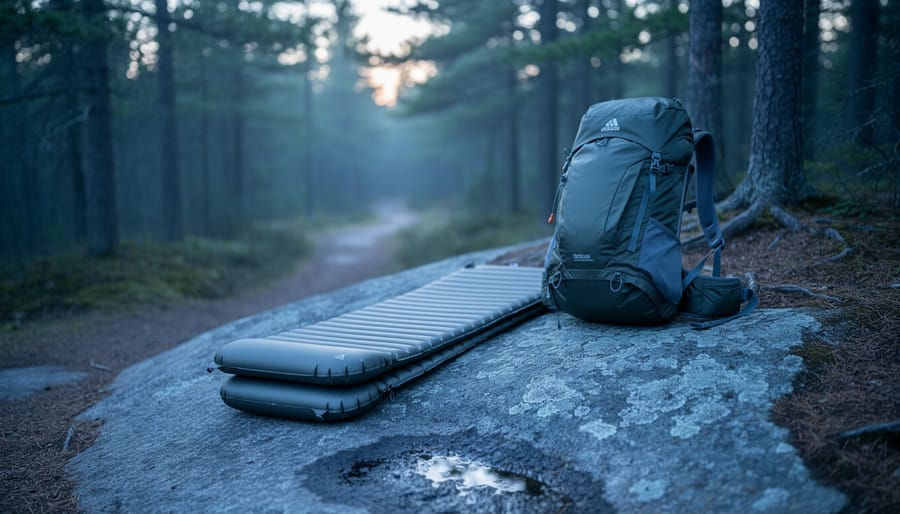
The right sleeping pad transforms a sleepless night on the unforgiving Canadian Shield into restful sleep that fuels your next portage. For backcountry hiking in Northern Ontario, you need a pad that balances three core elements: insulation against cool ground temperatures (especially during spring and fall when nights regularly dip below 5°C), packability for multi-day treks across rugged terrain, and durability to withstand the granite outcrops and pine root networks that define this landscape.
Your choice comes down to understanding R-value ratings for thermal resistance, deciding between foam, air, and self-inflating constructions, and matching weight to your trip length. A weekend warrior heading out from Killarney can afford different compromises than someone embarking on a week-long journey through Wabakimi Provincial Park.
This guide walks you through the selection criteria that matter for Northern Ontario’s unique conditions, compares pad types with honest assessments of their trade-offs, and recommends specific models tested against the realities of portaging and camping on traditional Anishinaabe and Cree territories. You’ll also learn the common purchasing mistakes that leave hikers cold, sore, or carrying unnecessary weight.
The decision matters because your sleeping system directly impacts safety. Hypothermia risk increases with fatigue, and poor sleep compounds every challenge the backcountry presents. When you’re practicing Leave No Trace principles on Crown land or respecting the protocols of indigenous-managed areas, a reliable pad becomes part of your commitment to responsible wilderness travel. Choose well, and you’ll wake ready to appreciate the boreal forest sunrise rather than nursing a stiff back and shivering through dawn.
Why Your Sleeping Pad Matters in Northern Ontario’s Backcountry
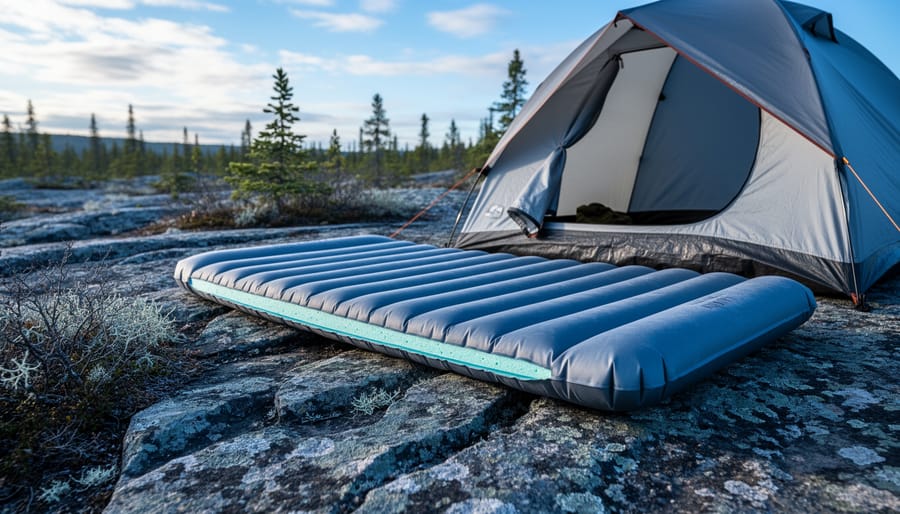
Northern Ontario’s backcountry doesn’t forgive poor sleep. When you’re navigating portages between pristine lakes, scrambling over granite outcrops, or shouldering a canoe through dense forest, rest becomes essential fuel for the next day’s demands. A quality sleeping pad transforms those hard-earned campsites from endurance tests into genuine recovery zones.
The Canadian Shield defines much of this landscape, ancient, unyielding rock that juts through thin soil and creates sleeping surfaces unlike anything farther south. Even carefully chosen tent sites reveal unexpected angles and pressure points after dark. Without adequate cushioning, you’ll spend the night shifting position, waking with sore hips and shoulders that compound the fatigue of miles already traveled.
Temperature drops quickly after sunset here, even during July and August trips. Cool air drifts off vast lake surfaces, and the thin boreal soil offers little thermal barrier. Your sleeping bag’s insulation compresses beneath your body weight, creating a cold bridge to the ground. A pad with sufficient insulation prevents this heat loss, maintaining warmth through the night when your body needs to repair muscles and restore energy.
Moisture presents another constant challenge. Morning dew settles heavily. Lake spray from paddling soaks gear. River crossings and sudden weather shifts introduce dampness that never quite dries in the forest shade. A quality pad creates a protective barrier, keeping you dry and comfortable while your tent floor battles condensation and damp ground.
Weight matters intensely on portage routes. Carrying your shelter, food, and gear over rocky trails between waterways demands ruthless efficiency. Modern pads pack down remarkably small while still delivering necessary comfort and warmth, making them essential for the unique rhythm of Northern Ontario travel, paddle, portage, repeat.
Choosing durable, reliable gear also honors the Leave No Trace principles that protect these indigenous lands and fragile ecosystems. A pad that lasts for years reduces waste and demonstrates respect for the wilderness that hosts your adventures.
Key Factors to Consider When Choosing Your Sleeping Pad
Insulation and Temperature Rating
The R-value measures a sleeping pad’s ability to resist heat loss to the ground, higher numbers mean better insulation. Northern Ontario’s backcountry demands careful attention to this rating because even summer nights cool down significantly, especially near the countless lakes and rivers that define the region’s landscape. An R-value between 2 and 3 works for warm-weather trips, but you’ll want 4 or higher for spring and fall adventures when temperatures drop sharply after sunset.
Understanding your pad’s insulation capabilities prevents miserable nights shivering on the Canadian Shield’s unforgiving rock. The Klymit Static V Base, for instance, lacks insulation and really only suits summer trips, it’s lightweight and affordable, but it won’t protect you when cool air settles into valleys or fog rolls off the water. If you’re planning shoulder-season explorations in September or May, an all-season pad like the Nemo Tensor All-Season Ultralight Insulated provides the warmth you need without excessive weight penalties.
Don’t assume summer means warm. Northern Ontario’s latitude brings cool evenings even in July, and moisture from portage routes or lakeside campsites amplifies the chill. Match your pad’s R-value to your planned travel dates and anticipated low temperatures, not just the calendar season. A well-insulated pad transforms comfort levels and ensures you wake rested for demanding trail days ahead, rather than exhausted from fighting cold all night.
Weight and Packability
When you’re planning multi-day treks through Northern Ontario’s wilderness, every ounce in your pack counts, especially on portage routes where you’ll carry everything between waterways. A sleeping pad that weighs two pounds feels manageable on day one but becomes a burden by your third portage or fifth day on the trail. This is where modern ultralight designs shine, allowing you to move efficiently without sacrificing rest quality.
Today’s best pads pack down remarkably small, fitting into spaces no larger than a water bottle. Options like the Nemo Tensor All-Season Ultralight Insulated demonstrate how current technology delivers both lightweight performance and excellent insulation, compressing into a tight bundle you can strap to your pack’s exterior or tuck inside without dominating valuable space. These compact designs free up room for food, safety gear, and other essentials.
The weight-comfort equation requires honest assessment of your priorities. If your route involves frequent portages or long trail days, shaving half a pound from your sleep system translates directly to easier hiking and faster recovery. For canoe-camping trips with shorter carries, you might opt for slightly heavier pads that offer more cushioning.
Consider your packing tips strategy alongside pad selection, efficient compression sacks and proper rolling technique maximize space savings. Modern sleeping pads prove you don’t need to choose between a good night’s sleep and a manageable pack weight for Northern Ontario adventures.
Comfort and Thickness
Sleeping pad thickness directly impacts your rest on the Canadian Shield’s notoriously uneven bedrock. Options typically range from 2 to 4 inches when fully inflated. Thicker pads like the Therm-a-Rest NeoLoft (1 inch thicker than competitors like the Nemo Tensor and 2 inches thicker than the Klymit Static) provide superior cushioning against roots, rocks, and irregular tent sites common throughout Northern Ontario’s backcountry. That extra loft translates to better insulation from cold ground and less pressure on hips and shoulders for side sleepers.
However, plush comfort comes with consequences. Thicker pads weigh more, pack larger, and take longer to inflate after a long day on the trail. For portage-heavy canoe routes where every ounce matters, a 3-inch pad often hits the sweet spot between cushioning and carrying burden. Ultralight backpackers might accept a slimmer 2.5-inch option to save weight, especially if they’re stomach sleepers or using multiple pads for added insulation. Test your sleep position at home first. What feels acceptable on your living room floor for ten minutes might leave you aching after a night on granite.
Durability and Material Construction
Northern Ontario’s Canadian Shield presents harsh realities for sleeping pad materials, sharp granite edges, abrasive lichen, moisture from dew and lake spray, and countless inflations across remote campsites. Look for pads constructed with ripstop nylon in the 20D to 75D denier range. Thicker deniers offer better puncture resistance on rocky terrain, though they add weight. Many quality pads feature reinforced wear patches on high-stress areas where your hips and shoulders compress the material against uneven ground.
Pay attention to valve design and seam construction. Welded seams typically outlast stitched versions in wet conditions. The best pads include laminated or TPU-coated fabrics that resist moisture penetration when you’re setting up camp on damp ground after paddling across northern lakes.
Always carry a repair kit, even the toughest pads can fail in wilderness settings. Test your patch application method at home before heading deep into Quetico or along the Coastal Hiking Trail where the nearest outfitter is days away. Some manufacturers offer field-repairable designs with accessible valves and straightforward patch systems. Consider bringing a closed-cell foam pad as backup insurance on extended trips, adding minimal weight while ensuring you’re never sleeping directly on cold ground if your primary pad fails.
Price and Value
Sleeping pad prices range from around $50 for basic models to $250-plus for premium options, and understanding this spectrum helps you match investment to actual needs. Budget pads like the Klymit Static V Base deliver reasonable comfort and packability at a fraction of premium costs, making them solid choices for occasional summer adventures or weekend warriors watching their gear budget. However, that low price means sacrifices in insulation and durability.
For Northern Ontario’s demanding conditions, spending more often pays off. Premium pads provide better R-values for cool nights, tougher materials for Canadian Shield rock, and superior comfort after long portage days. If you’re tackling multi-day routes or shoulder-season trips, investing in a well-insulated pad prevents miserable nights and ensures you wake ready for the trail.
Consider frequency and conditions. Casual summer campers can thrive on budget options. Serious backcountry explorers who’ll log dozens of nights yearly should view their sleeping pad as essential infrastructure worth the upfront cost. Quality pads last years, spreading that investment across countless wilderness sleeps.
Types of Hiking Sleeping Pads Compared
Air Pads (Inflatable)
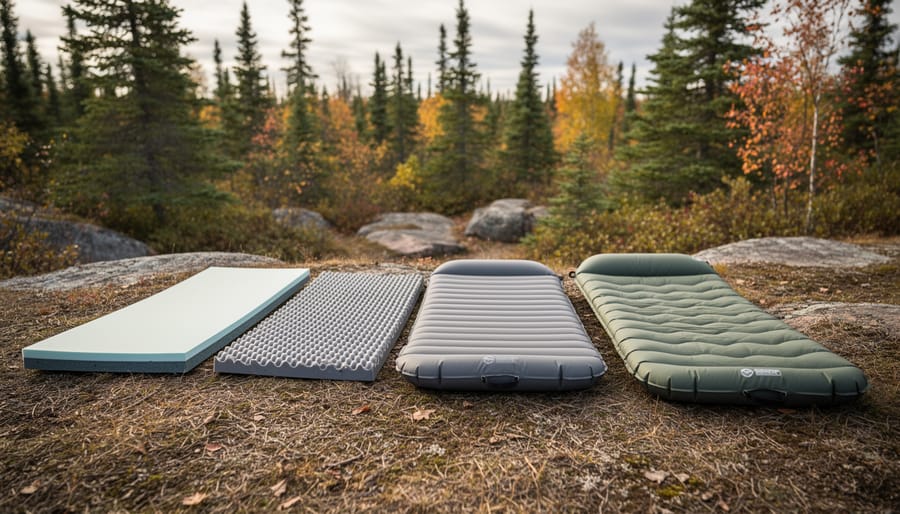
Air pads have transformed backcountry sleep in Northern Ontario, offering a near-mattress experience in a package that weighs less than a water bottle. These inflatable pads use air chambers to create cushioning and insulation, delivering impressive comfort without the bulk of traditional foam options.
The standout advantage is weight savings. Most quality air pads weigh between 300 and 500 grams while packing down to roughly the size of a Nalgene bottle. For paddlers facing multiple portages across the Algonquin to Temagami corridor, this makes a tangible difference when you’re carrying a canoe overhead and navigating rocky trails. The Nemo Tensor All-Season Ultralight Insulated exemplifies this category, combining lightweight construction with genuine insulation and a compact pack size that leaves room in your gear bag for bear canisters and extra layers.
Comfort levels rival home mattresses on many models, particularly those with thickness exceeding two inches. That cushioning proves invaluable when you’re pitching camp on the Canadian Shield’s granite surfaces. Properly insulated air pads maintain warmth through their construction, using materials that trap heat rather than letting it escape into cold ground.
The trade-off comes down to vulnerability. A sharp stick, granite edge, or porcupine quill can puncture an air pad, leaving you sleeping on bare ground miles from the nearest road. Carrying a patch kit becomes non-negotiable, and some adventurers pack a lightweight foam backup for critical trips. Despite this concern, weight-conscious hikers and canoe-trippers consistently choose air pads for their unmatched combination of comfort and packability.
Self-Inflating Foam Pads
Self-inflating foam pads represent the middle ground between ultra-minimalist closed-cell foam and high-tech air mattresses. These pads feature open-cell foam wrapped in an airtight shell with a valve that allows them to self-inflate when opened. The foam expands and draws air inside, then you add a few breaths to reach your preferred firmness. This hybrid design delivers consistent performance without the fuss of manual inflation or the bulk of traditional foam.
For Northern Ontario’s backcountry, self-inflating pads offer notable advantages. Their foam core provides reliable insulation even if the shell develops a small leak, you won’t wake up shivering on cold ground if a pine needle causes a slow puncture. They’re more durable than pure air pads, better handling rough Canadian Shield campsites and the wear of repeated portages. The moderate weight sits between ultralight inflatables and heavy closed-cell options, making them practical for canoe trips where portages aren’t excessively long.
Ease of use stands out as a key benefit. After a long day paddling or hiking, you simply unroll the pad, open the valve, and let it inflate while you set up your tent. No pump required, no exhausting yourself with dozens of breaths. The foam provides decent cushioning on uneven terrain, though thickness varies by model, some offer better comfort than others depending on your sleeping style.
These pads suit adventurers who value reliability and simplicity over shaving every ounce from their pack weight. If you’re exploring remote lakes and trails where gear failure means real consequences, a self-inflating pad delivers peace of mind.
Closed-Cell Foam Pads
Closed-cell foam pads are the workhorses of backcountry gear, nearly indestructible, completely weatherproof, and reliable in every condition Northern Ontario throws at you. These pads consist of dense foam that won’t absorb water, can’t puncture or deflate, and require zero setup. You simply unroll them on the rockiest Canadian Shield outcrop or dampest portage landing and they’re ready.
The trade-offs are real. Comfort is minimal compared to air or self-inflating options, and they’re bulky, typically strapped to the outside of your pack rather than tucking neatly inside. Most closed-cell pads offer limited insulation relative to their bulk, though they do provide a consistent barrier between you and cold ground.
Where closed-cell foam shines is reliability. On remote routes where a punctured air pad becomes a serious problem, foam delivers fail-proof performance. They’re also remarkably affordable, making them accessible for beginners or as emergency backup on demanding trips.
Many experienced paddlers and hikers carry a short closed-cell pad as insurance, combining it with a lighter inflatable for their torso while relying on the foam for leg support and contingency warmth. This approach balances comfort with the peace of mind that comes from having gear that simply cannot fail, no matter how rugged the terrain or how many portages you tackle across Northern Ontario’s wild interior.
Recommendations for Different Northern Ontario Adventures
Selecting the right sleeping pad depends on matching its capabilities to your specific Northern Ontario adventure. The region’s diverse landscapes, from rugged Shield hiking to lake-dotted canoe routes, demand different approaches to gear choices.
For multi-day portage routes along the Lady Evelyn-Smoothwater or Temagami waterways, where every ounce matters between carries, the Nemo Tensor All-Season Ultralight Insulated delivers the ideal balance. This pad packs down small enough to fit easily in a canoe pack, provides reliable insulation for cool lakeside nights, and offers enough comfort to recover from demanding portages. Its lightweight design won’t burden you during kilometer-long carries, yet it maintains warmth when temperatures drop after sunset near the water.
Summer base camping adventures around Lake Superior Provincial Park or Quetico allow more flexibility with weight and bulk. The Klymit Static V Base represents excellent value for these trips, costing a fraction of premium options while delivering reasonable comfort for warm-weather excursions. Since it lacks significant insulation, reserve this pad strictly for summer trips when overnight lows stay moderate. Its lightweight construction still makes it easy to carry to your chosen campsite, and the savings leave budget for other gear investments.
Shoulder-season hiking in September or May demands serious insulation as Northern Ontario nights turn genuinely cold. The Therm-a-Rest NeoLoft excels here with its extra thickness, a full inch more than the Nemo Tensor and two inches beyond the Klymit Static. This additional cushioning provides superior comfort on rocky Canadian Shield campsites while delivering warmth for crisp autumn evenings along the Coastal Trail or spring trips into Algoma Country.
Consider these scenario-specific recommendations:
- Multi-day portage routes: Nemo Tensor All-Season for optimal weight-to-warmth ratio and packability
- Summer base camping: Klymit Static V Base for budget-friendly comfort in warm conditions
- Shoulder-season hiking: Therm-a-Rest NeoLoft for extra insulation and cushioning on cold nights
- Car camping with short hikes: Self-inflating foam pad for durability and ease without weight concerns
- Ultralight thru-hiking: Air pad with highest R-value per gram to minimize pack weight over long distances
Car camping with day hikes to waterfalls or scenic overlooks removes weight restrictions entirely. Here, a self-inflating foam pad offers durability and convenience without the need to obsess over grams. You’ll appreciate the reliable performance and simple setup after exploratory hikes around your base camp.
For ambitious thru-hikers tackling long-distance routes like the Trans Canada Trail segments through the region, prioritize the lightest air pad with adequate insulation for your travel season. Every gram saved compounds over hundreds of kilometers, making ultralight options worthwhile investments despite higher costs. Updated reviews from spring 2026 confirm these pads continue meeting the demands of serious backcountry travelers.
Match your pad choice to your adventure’s intensity, season, and weight tolerance. Northern Ontario’s wilderness rewards thoughtful gear selection with comfortable nights under star-filled skies.
Common Mistakes to Avoid When Buying a Sleeping Pad
Choosing a sleeping pad based solely on price is one of the most common mistakes backcountry adventurers make. While budget options like the Klymit Static V Base offer reasonable comfort at a fraction of the cost of premium models, they often lack crucial features for Northern Ontario conditions. That pad’s minimal insulation makes it suitable only for summer trips, leaving you cold during shoulder-season adventures when nights dip unexpectedly. Price matters, but matching the pad to your specific trips prevents miserable nights and potential safety issues.
Ignoring temperature ratings for Northern Ontario’s cool nights ranks as another critical error. Even summer evenings along Lake Superior or in the boreal forest can surprise unprepared campers with temperatures dropping to single digits. An R-value appropriate for southern camping won’t cut it here. Check ratings carefully and choose pads designed for cooler conditions rather than assuming summer means warm everywhere.
Buying too heavy for portage routes creates unnecessary suffering on multi-day canoe trips. Northern Ontario’s waterways demand repeated carries between lakes, and every ounce counts when you’re shouldering gear over rocky trails. Heavier self-inflating pads might seem appealing for comfort, but they’ll punish you during portages. Balance your need for cushioning against the reality of how you’ll transport that pad through the wilderness.
Neglecting proper sizing leaves taller hikers with their feet hanging off the pad or causes wider sleepers to roll onto cold ground. Measure yourself and choose accordingly, remembering that a pad 1 inch thicker, like the Therm-a-Rest NeoLoft compared to competitors, provides significantly more cushioning on the Canadian Shield’s notorious rocky terrain. Don’t assume regular sizing fits everyone.
Finally, failing to consider how your pad integrates with your overall sleep system leads to compatibility issues. Your sleeping bag, tent dimensions, and even your pillow choice all interact with pad selection. Think holistically about your backcountry bedroom rather than buying pieces in isolation.
Caring for Your Sleeping Pad in Northern Ontario Conditions
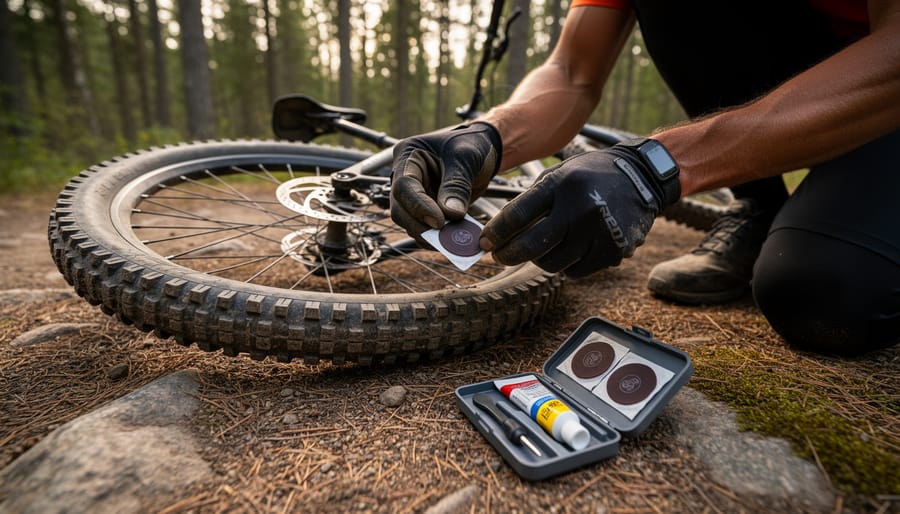
Northern Ontario’s backcountry demands more from your sleeping pad than a typical campground. Lake crossings, Canadian Shield rock, forest debris, and variable weather all test your gear. Following key safety tips includes proper equipment care that prevents gear failure miles from the nearest trailhead.
Clean your pad after every trip, especially when it contacts lake water or forest soil. Wipe down the surface with a damp cloth and mild soap, then rinse thoroughly and let it dry completely before storage. Never pack a wet pad, moisture trapped in foam or fabric layers breeds mold and compromises insulation over time.
Store your pad loosely rolled or flat in a cool, dry place away from direct sunlight. Avoid compressing air pads or self-inflating models for long periods between trips, as this degrades foam and stresses seams. Closed-cell foam pads can stay compressed without damage.
- Keep patch kits accessible, duct tape, adhesive patches, and valve tools can save a trip.
- Place a groundsheet under your pad on rocky Canadian Shield terrain to prevent punctures.
- Inflate pads using the included pump sack rather than your breath to avoid interior moisture buildup.
- Check valves and seams before each trip, particularly after winter storage.
- Respect indigenous lands by clearing all camp debris and avoiding damage to vegetation or rock surfaces.
Test your pad’s inflation and check for slow leaks before remote journeys. Fill a bathtub with water, submerge the inflated pad, and watch for bubbles. Small leaks grow into major problems when you’re paddling Lake Superior’s coastline or hiking the Casque Isles Trail.
Practicing Leave No Trace extends to gear choices too. Repairing instead of replacing reduces waste, and proper care means your sleeping pad serves you through dozens of Northern Ontario adventures rather than ending up in a landfill after a single season.
Frequently Asked Questions
What R-value do I need for Northern Ontario camping?
For summer trips (June through August), an R-value of 2-3 suffices for most nights, though cool snaps can occur even in July. Spring and fall adventures demand R-values of 4 or higher, as overnight temperatures regularly drop near freezing across the Canadian Shield, particularly in September and early October when northern lights viewing is popular.
How do I choose a sleeping pad for canoe-camping trips?
Prioritize packability and reasonable weight over ultralight specs, since canoes eliminate the need to carry everything on your back between portages. Air pads like the Nemo Tensor All-Season work well because they pack down small, leaving room for other gear in your dry bags, though bring a patch kit since rocky shorelines increase puncture risk.
Can I repair a punctured pad on remote trails?
Most quality sleeping pads include repair kits with patches and adhesive that work in field conditions. Clean the damaged area with lake water, dry it thoroughly, apply the patch, and let it cure for at least an hour before re-inflating, practice this process at home so you’re confident when miles from the trailhead.
How do I protect my sleeping pad from moisture in this region?
Northern Ontario’s lakes, rivers, and morning dew create constant moisture challenges. Store your pad in a waterproof stuff sack inside your pack, set up your tent on well-drained ground away from shorelines, and use a ground sheet beneath your tent to block ground moisture that seeps through tent floors on extended trips.
What environmental considerations matter when camping here?
Practice Leave No Trace principles throughout your trip, pack out everything you bring in, and respect indigenous lands by learning whose traditional territory you’re visiting. Choose durable gear that lasts multiple seasons rather than cheap options destined for landfills, reducing your environmental footprint across this ecologically sensitive landscape.
Should I buy a pad that’s longer or wider than standard?
Taller hikers benefit from long versions that prevent feet from hanging off the edge, while side sleepers often prefer wider pads for better shoulder and hip support on rocky terrain. Regular-width, regular-length pads work for most people under six feet tall who sleep on their backs, saving weight without sacrificing comfort on multi-day treks.
These questions reflect real concerns from adventurers planning Northern Ontario trips, where conditions differ markedly from southern campgrounds. The balance between weight, warmth, and durability becomes especially critical when paddling remote routes or hiking trails where resupply isn’t an option. Weather variability in this region means that even summer campers face surprisingly cool nights, particularly after rain systems move through from Hudson Bay or when camping at higher elevations along ridgelines.
Your sleeping pad choice interacts with other gear decisions too. Pair a thinner pad with a warmer sleeping bag, or use a closed-cell foam pad underneath an inflatable for extra insulation and puncture protection on especially rocky sites. Some paddlers carry two pads, a lightweight inflatable for portaging sections and a bulkier self-inflating option that stays in the canoe, switching based on the day’s demands. Test your complete sleep system before committing to a week-long expedition, since comfort preferences vary widely and what works for someone else might leave you tossing all night on the hard Canadian Shield.
Choosing the right sleeping pad transforms your Northern Ontario wilderness experience from merely surviving the night to truly resting beneath some of Canada’s most breathtaking skies. Whether you’re tackling the dramatic cliffs of Sleeping Giant Provincial Park, portaging between remote lakes, or paddling down ancient river routes, your pad is the foundation of comfort and warmth that makes every adventure sustainable.
Consider your specific needs, the season you’ll explore, the terrain you’ll encounter, and how far you’ll carry your gear through the boreal forest. Think about the environmental footprint you leave on this remarkable landscape, where respect for indigenous lands and Leave No Trace practices protect wilderness for future generations. A quality sleeping pad isn’t just gear; it’s an investment in countless nights under the northern lights, mornings waking to loon calls echoing across misty lakes, and the confidence to push deeper into the backcountry knowing you’ll sleep well.
The right choice supports years of exploration in this extraordinary region where the Canadian Shield meets endless waterways and the stars shine brighter than anywhere else.
