
Scramble Hiking: Where Northern Ontario’s Trails Meet the Thrill of Rock
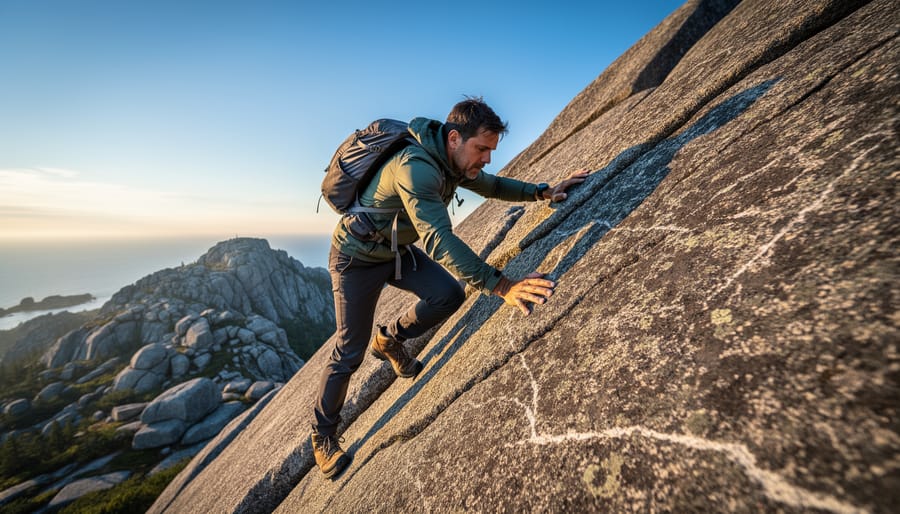
The moment your hands grip cold granite to pull yourself up a boulder face, you’ve crossed from hiking into scramble territory. This high-intensity outdoor discipline sits squarely between trail hiking and technical rock climbing, demanding you use all four limbs to navigate steep, rugged terrain without ropes or climbing gear. Northern Ontario’s ancient Precambrian Shield offers some of the most spectacular scrambling routes in Canada, where billion-year-old rock formations create natural playgrounds for adventurers ready to leave maintained trails behind.
Scramble hiking has surged in popularity across 2026, driven partly by social media showcasing dramatic ridge traverses and partly by outdoor enthusiasts seeking fresh challenges beyond conventional hiking. The Canadian Alpine Club reported a 40% increase in scrambling course registrations this year, with particular interest in routes across the Superior Highlands and Lake Nipigon regions.
What distinguishes scrambling from hiking is simple: if you need your hands for balance and upward progress, you’re scrambling. Routes typically involve Class 3 terrain in mountaineering terms, where exposure increases and consequences of falls become serious. Unlike technical climbing, you won’t use ropes, harnesses, or protection equipment. Unlike hiking, you’ll navigate cliff bands, boulder fields, and exposed ridgelines where route-finding skills prove essential.
Northern Ontario presents unique scrambling opportunities shaped by glacial retreat and erosion patterns. The Canadian Shield’s exposed bedrock creates natural scrambling corridors, particularly along Lake Superior’s coastal cliffs and the rugged terrain surrounding Sleeping Giant Provincial Park. These landscapes also carry deep significance to Anishinaabe peoples, whose ancestral territories encompass much of the region. Approaching these spaces with respect and cultural awareness enriches the experience while honoring the Indigenous stewards who have known these rocks for millennia.
What Exactly Is Scramble Hiking?
Scramble hiking occupies the exhilarating middle ground where walking ends and climbing begins. It’s the point on a route where you instinctively reach forward to steady yourself on rock, where your hands shift from optional balance aids to necessary tools for upward progress. Unlike a maintained trail with clear footing, scramble terrain demands that you read the rock face ahead, choose your own line, and trust your limbs to work together across exposed stone.
The outdoor community classifies terrain using the Yosemite Decimal System classes a framework that helps adventurers understand what they’re getting into before committing to a route. This system becomes essential language for anyone moving beyond groomed paths.
- Class 1
- Standard trail hiking on maintained paths with minimal obstacles. Most Northern Ontario provincial park trails fall into this category, including boardwalk sections through boreal forest.
- Class 2
- Off-trail hiking over rough ground, talus fields, or boulder-hopping where hands might occasionally touch rock for balance. Many approaches to Shield overlooks transition into Class 2 terrain as you leave the established path.
- Class 3
- True scrambling where hands become essential for upward movement and exposure increases, though falls wouldn’t necessarily be fatal. This defines most scramble hiking, including sections near cliff edges on the Sleeping Giant’s rim or granite outcrops above northern lakes.
- Class 4
- Exposed scrambling where a fall could cause serious injury or death, often prompting experienced parties to use ropes for protection. This exceeds typical scramble hiking and approaches technical climbing.
- Class 5
- Technical rock climbing requiring specialized equipment, rope systems, and climbing-specific skills. No longer considered scrambling.
Scramble hiking primarily lives in the Class 2-3 range, where the rock demands attention but doesn’t require harnesses or climbing hardware. You’re not clipping into protection like a rock climber or following a single technical route like a mountaineer tackling a peak’s exposed ridge. Instead, you’re problem-solving across terrain that offers multiple possible lines, where good judgment about handholds and route choice matters more than technical climbing grades.
The discipline’s profile has surged in 2026, with challenges like The Fool’s Traverse in California’s San Gabriel Mountains drawing attention to scramble hiking’s unique appeal. That route covers 29.5 miles with 11,600 feet of vertical gain across multiple peaks, requiring months of training and sitting squarely in the extremely difficult category. Closer to home, events like the Turtle Mountain scramble organized on May 23, 2026 demonstrate how regional communities are embracing this style of adventure that honours raw terrain on its own terms.
Why Scramble Hiking Is Gaining Momentum in 2026
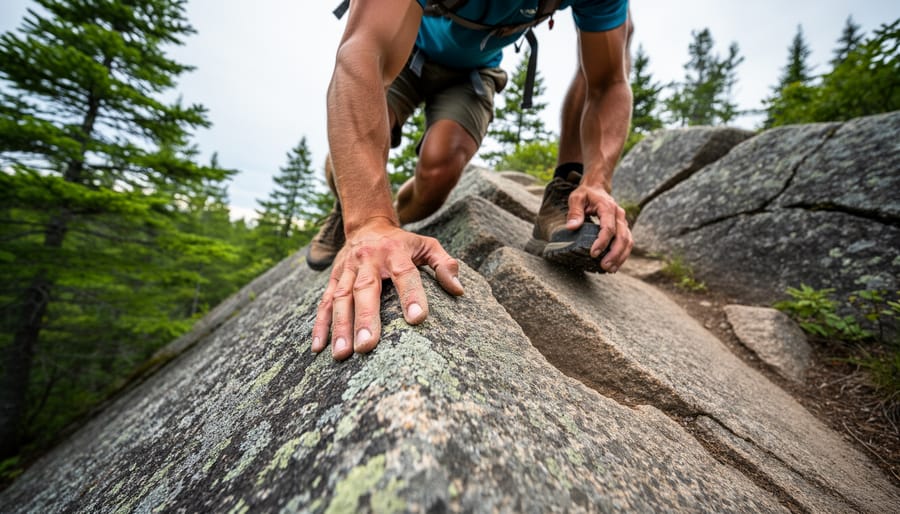
Scramble hiking has exploded into the outdoor consciousness in 2026, driven by a collective hunger for adventure that sits between the familiar and the extreme. Social media feeds overflow with images of climbers poised on exposed ridgelines, hands gripping ancient rock, backgrounds framing endless wilderness. These aren’t technical climbing posts requiring gear lists and rope systems, they’re accessible enough to inspire action rather than intimidation.
The appeal lies precisely in that accessible challenge. Scramble hiking offers the thrill of vertical terrain and exposure without the barrier to entry that technical climbing presents. You don’t need a climbing partner, expensive rack of protection gear, or years of rope skills. What you need is solid footwear, capable hands, and respect for your limits. That proposition resonates with hikers who’ve exhausted their local trail networks and crave something that demands more of them.
The trend toward genuine immersion drives much of this momentum. Scrambles force presence in ways groomed trails cannot. When you’re reading rock, testing holds, and choosing your own path across untrailed terrain, there’s no mental space for distraction. It’s wilderness engagement at its most direct, problem-solving in real time, body and landscape in constant dialogue.
Events like the Turtle Mountain scramble on May 23, 2026, organized with Andrey Junior, demonstrate how communities are coalescing around this discipline. Meanwhile, challenges like The Fool’s Traverse, 29.5 miles and 11,600 feet of vertical gain across 11 peaks in the San Gabriel Mountains, showcase scramble hiking’s serious athletic dimension. That traverse isn’t a casual weekend experiment. It’s an extremely difficult undertaking requiring months of training and experience, and it’s capturing imaginations precisely because it represents scramble hiking’s full potential.
Northern Ontario sits perfectly positioned to meet this surge. The Shield’s granite beckons a generation of adventurers ready to place their hands on rock.
Northern Ontario’s Natural Scramble Terrain
The Canadian Shield Advantage
The Canadian Shield offers scramblers something mountain ranges formed from sedimentary layers or volcanic rock simply can’t match: a billion years of geological stability. This ancient Precambrian bedrock has weathered countless ice ages and erosion cycles, leaving behind granite and gneiss so solid you’re gripping stone that was ancient when the Rockies were still ocean floor. Where crumbling shale in younger mountains demands constant vigilance and limestone can fracture unexpectedly, Shield granite holds firm under your weight.
That age translates directly to better scrambling. The rock’s crystalline structure creates natural friction even when smooth, while differential weathering carves handholds and footholds that feel almost designed for human hands. Cracks run predictably along mineral boundaries, ledges form at consistent angles, and the coarse texture grips boot rubber without the slickness of polished sedimentary faces. You’ll find varied exposure too, gentle slabs for beginners transitioning from trails, vertical faces for experienced scramblers, and everything between.
Unlike the loose scree fields common on volcanic peaks or the flaking layers of sedimentary cliffs, Shield outcrops stay put. Test a hold and it doesn’t crumble. That reliability lets you focus on movement and route-finding rather than constantly questioning whether the rock itself will betray you. The Shield teaches scrambling fundamentals on terrain that rewards technique over luck.
Seasonal Considerations
Northern Ontario’s dramatic seasonal shifts transform scramble conditions in ways that demand respect and adaptation. Summer offers the most forgiving window, when dry granite provides secure friction and extended daylight allows unhurried route-finding across the Shield’s ancient rock. Thunderstorms build quickly in July and August, however, turning grippy surfaces slick within minutes, a reminder that even prime season requires vigilant weather monitoring.
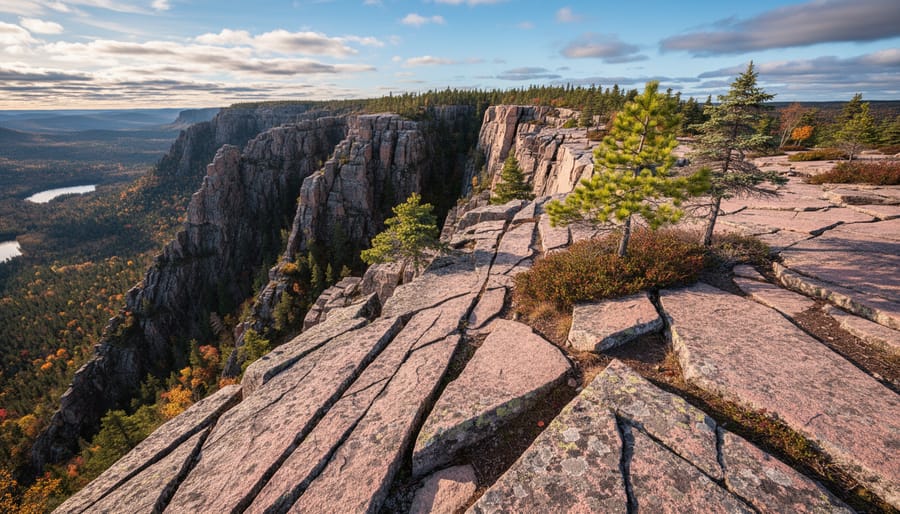
Autumn delivers the region’s most spectacular scrambling, with hardwood forests blazing against granite backdrops and crisp air sharpening focus. September through early October brings stable conditions before freeze-thaw cycles begin, though shorter days compress your scrambling window. The temperature contrast between sun-warmed rock faces and shaded approaches becomes pronounced, making layering essential for comfort during extended routes.
Spring presents Northern Ontario’s trickiest scramble conditions. Snowmelt lingers in shaded gullies well into May, creating invisible ice patches on north-facing rock. Runoff transforms normally dry routes into slippery channels, and the same meltwater that feeds the region’s waterfalls can turn stable talus into unstable slopes. Understanding these seasonal differences becomes as critical as distinguishing trekking vs hiking when planning cold-weather adventures.
Winter scrambling exists in a different realm entirely, requiring ice climbing skills, crampons, and intimate knowledge of how frozen conditions alter rock characteristics. Most scramblers wisely reserve the Shield’s technical terrain for warmer months, when the rock itself becomes your trusted partner rather than an adversary cloaked in ice.
Essential Skills and Safety for Scramble Hiking
Reading the Rock
Your life depends on reading rock correctly. Before you commit weight to any hold, run through a quick assessment: does the surface feel solid or crumbly under your palm? Tap it gently, good granite rings with a dull thud, while hollow sounds or visible cracks signal instability. Look for colour changes too: darker patches on Shield granite often indicate water seepage, which turns reliable friction into a skating rink. Lichens grow only on stable rock that hasn’t moved in decades, so their presence is actually reassuring.
Test every hold before trusting it. Push or pull in the direction you’ll load it, starting gently and increasing pressure. Loose blocks often reveal themselves with a slight wobble or grinding sound. On talus fields, those chaotic slopes of broken rock, step near the uphill side of larger blocks where they’re wedged most securely. Avoid the downhill edges where rocks teeter like unbalanced scales.
Wet granite deserves extreme caution. Northern Ontario’s frequent morning dew and sudden weather shifts can slicken surfaces within minutes, eliminating the friction your scramble depends on. If the rock feels greasy rather than grippy, consider waiting or choosing an alternate route. These same principles apply to general travel safety tips in remote terrain, reading conditions accurately prevents accidents that are hours from help.
Watch for vegetation sprouting from cracks; it signals fractured rock prone to breaking. Your hands and feet become your primary sensors on scramble terrain, so slow down and listen to what they’re telling you.
When to Turn Back
The most important decision in scrambling isn’t which rock to grab next, it’s recognizing when to turn around. If a move feels beyond your comfort level, if the exposure suddenly triggers anxiety, or if weather shifts, descending isn’t failure. It’s wisdom.
Anishinaabe elders teach that the land speaks to those willing to listen. When rock feels unstable under your hands, when clouds obscure the route ahead, when your body signals fatigue, these are messages demanding respect. Northern Ontario’s Shield has stood for billions of years; it doesn’t care about summit fever or social media posts.
Develop clear retreat triggers before you start: deteriorating conditions, route uncertainty beyond five minutes, any move requiring true climbing rather than scrambling, or simply that gut feeling something’s wrong. Many scramble accidents happen on descent when climbers push past their turning point, then face downclimbing exhausted on unfamiliar terrain.
The Shield will be there tomorrow. Returning safely means you can come back to try again, better prepared and humbler for the lesson learned.
Gear Essentials for Northern Ontario Scrambles
Your gear choices for scramble hiking directly affect both safety and environmental impact on Northern Ontario’s Shield terrain. The right equipment keeps you secure on exposed rock while minimizing your footprint on fragile ecosystems.
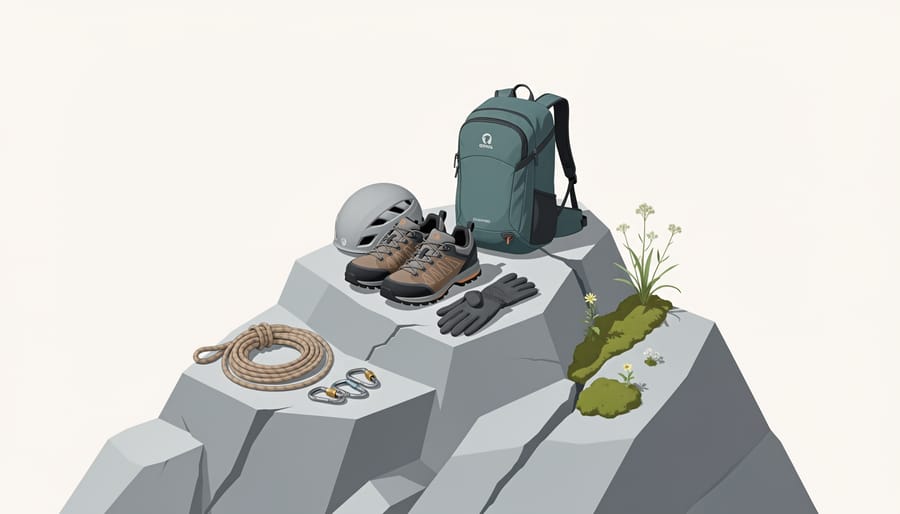
Footwear deserves your most careful consideration. Approach shoes excel on technical scrambles, their sticky rubber grips granite exceptionally well, and their lower cut allows ankle flexibility for precise footwork on uneven surfaces. However, Northern Ontario’s trails often involve kilometers of hiking before reaching scramble sections. A good compromise is stiff hiking boots with aggressive tread, particularly models designed for alpine use. Test your boots on wet rock before committing to a challenging route, since Shield granite becomes treacherous when damp.
Gloves protect your hands during extended scrambles and improve grip on sharp-edged Shield rock. Lightweight climbing gloves with textured palms work well, though some scramblers prefer the direct feel of bare hands for technical sections and carry gloves only for talus fields or prolonged hand-jamming. A helmet becomes essential on routes with loose rock above, common around fractured cliff bands. Choose a lightweight climbing helmet rather than a heavy mountaineering model for comfort during long approaches.
For navigation, a GPS device or downloaded offline maps on your phone supplements traditional map and compass skills. Cell service disappears quickly in Northern Ontario’s backcountry. Carry a whistle, headlamp with extra batteries, and a small first-aid kit tailored to scramble-specific injuries, abrasions, cuts from sharp rock, and ankle sprains.
| Essential Gear | Optional But Recommended | Northern Ontario Specifics |
|---|---|---|
| Stiff hiking boots or approach shoes | Lightweight climbing helmet | Test grip on wet granite beforehand |
| Navigation tools (GPS + map/compass) | 20m lightweight rope + webbing | Zero cell service in remote areas |
| Gloves, headlamp, whistle | Emergency bivy sack | Weather changes rapidly on exposed Shield |
| First-aid kit (scramble-adapted) | Trekking poles (collapsible) | Bug protection essential May-August |
Pack a 20-meter section of lightweight rope and a couple prusik loops or webbing slings. You might never use them, but they provide critical options for lowering packs down steep sections or rigging emergency handrails. These items weigh little and compress easily using smart packing tips.
Choose durable, repairable gear over disposable options. Quality equipment reduces waste and performs reliably in Northern Ontario’s demanding conditions. Bring a small stuff sack for any trash you generate, and inspect your gear regularly for loose threads or hardware that might shed microplastics on pristine rock faces.
Preparing Physically and Mentally
Scramble hiking demands capabilities most traditional hikers haven’t developed. Your legs might handle elevation gain with ease, but can your hands grip cold granite for an hour straight? Can you balance on a narrow ledge while a gust of wind tests your composure? Building scramble-ready fitness means training your body and mind for movements hiking rarely requires.
Start with grip strength and forearm endurance. Hang from pull-up bars for progressively longer holds, squeeze tennis balls during meetings, and practice dead hangs to simulate prolonged rock contact. Your fingers and forearms will fatigue quickly on early scrambles, strengthening them prevents the trembling grip that forces unsafe decisions.
Balance training separates confident scramblers from hesitant ones. Walk narrow rails at parks, practice single-leg stands with eyes closed, and try slacklining if accessible. These exercises build the proprioceptive awareness you’ll need when your boot edge rests on a three-inch ledge with exposure below.
Core stability matters more than raw strength. Planks, side planks, and rotational exercises prepare your torso for the constant micro-adjustments scrambling demands. You’re not powering through obstacles, you’re flowing across them with controlled movement.
Mental preparation proves equally critical. Start visualizing routes before attempting them, imagining each hand placement and weight shift. Practice exposure comfort on shorter sections before committing to longer scrambles. The Fool’s Traverse, 29.5 miles covering 11,600 vertical feet, requires months of training specifically because mental endurance fails before physical capability on such challenges.
Build progressively. Begin with Class 2 terrain where retreat stays simple. Graduate to exposed Class 3 sections only after mastering easier ground. Northern Ontario’s Shield offers natural progression, find a modest outcrop, master it completely, then seek bigger challenges. Respect your current limits while systematically expanding them. The rock will wait. Your readiness determines when you meet it safely.
Indigenous Perspectives on Navigating Rugged Terrain
Long before the term “scramble hiking” entered outdoor recreation vocabulary, Anishinaabe and other First Nations peoples navigated the Canadian Shield’s unforgiving terrain with practiced skill and profound respect. Their approach to moving across rock faces, cliff edges, and exposed ridges was never about conquest or personal achievement. It was about survival, stewardship, and maintaining a reciprocal relationship with the land itself.
Indigenous knowledge of route-finding emphasized reading natural signs, the way moss grows on north-facing rock, how wind patterns shape trees near exposed summits, where stone provides the most secure passage after rain. Elders taught younger travelers to move deliberately, testing each handhold, recognizing that the rock decides whether passage is granted. This humility stands in stark contrast to the modern impulse to force a route or push through discomfort for summit photos.
The concept of the land as teacher remains central. When you place your hand on ancient Shield granite, you connect with stone that has witnessed thousands of years of careful passage. Traditional teachings emphasize listening to what the terrain communicates, when conditions suggest turning back, when fatigue clouds judgment, when weather patterns shift dangerously. This wisdom isn’t about limiting adventure; it’s about ensuring you return safely to share what you’ve learned.
Modern scramblers can honor this heritage by approaching routes with reverence rather than entitlement, recognizing that moving through challenging terrain is a privilege requiring both skill and humility, and understanding that the greatest achievement isn’t reaching the top but respecting the journey itself.
Environmental Ethics for Scramble Hikers
Scramble terrain places you in direct contact with some of Northern Ontario’s most vulnerable ecosystems. The vertical rock faces and cliff-edge environments you traverse support fragile lichen communities that can take decades to regenerate after a single careless boot scrape. These slow-growing organisms cling to granite surfaces where few other plants survive, creating crucial habitat for insects and providing food for wildlife during harsh winters.
As you navigate cliffsides, identify and avoid any vegetation rooted in cracks and ledges. A single misplaced hand can uproot plants that took years to establish in these harsh conditions. Stay on bare rock whenever possible, and resist the temptation to grab plants for handholds, they rarely provide secure grip and their destruction is permanent.
Nesting raptors, including peregrine falcons and hawks, choose remote cliff ledges precisely because they offer protection from ground predators and human disturbance. If you encounter birds exhibiting alarm behavior or spot nests on ledges, retreat immediately and find an alternate route. Spring and early summer nesting seasons demand particular vigilance.
The cairn question deserves thoughtful consideration. While marker piles can aid navigation, excessive cairn building mars the pristine character of unmarked scramble routes and can mislead other adventurers. Build cairns only when genuinely necessary for safety, and dismantle unnecessary stacks you encounter. Northern Ontario’s wilderness should retain its wild character, free from the visual clutter that proliferates on more popular scrambles elsewhere.
Practicing thorough respect nature etiquette means accepting that scramble terrain requires extra care. Pack out everything, including organic waste that decomposes slowly on exposed rock, and treat these vertical landscapes with the reverence they deserve.
The moment your hands first grip ancient granite to pull yourself up a rock face, something shifts. The trail hasn’t ended, it has simply transformed into something more intimate, more demanding, more alive. Scramble hiking strips away the buffer between you and the land, creating a dialogue written in friction and balance, in the solid reassurance of billion-year-old rock beneath your palms.
Northern Ontario’s Shield terrain offers this conversation in abundance, but it demands respect. The same rugged landscape that Anishinaabe peoples have navigated with wisdom and humility for countless generations still requires that same mindset today. Modern scramblers inherit not just the terrain, but the responsibility to approach it with proper preparation, environmental awareness, and cultural sensitivity.
As scramble hiking gains momentum in 2026, the opportunity to experience Northern Ontario’s wild places from this unique perspective has never been more compelling. But the challenge isn’t just physical. It’s about recognizing when the land calls for retreat, protecting fragile ecosystems clinging to rock faces, and leaving no trace of your passage except footprints that rain will soon wash away.
The trails will always be there for those seeking gentler paths. But for adventurers ready to meet the Shield on its own terms, where boots transition to handholds and horizons open from exposed heights, Northern Ontario’s scramble terrain offers transformation. Prepare thoroughly, move thoughtfully, and discover where trails end and genuine wilderness connection begins.
