
What Are Switchbacks in Hiking (and Why Do Trails Use Them)?
A switchback is a trail feature designed to ease the ascent or descent on steep terrain, creating a zig-zag pattern up a hillside or mountainside. Rather than forcing hikers to climb straight up a punishing grade, switchbacks fold the trail back on itself horizontally, transforming a brutal vertical slog into a series of manageable, angled traverses.
If you’ve ever studied a trail map of Northern Ontario’s rugged backcountry and noticed serpentine lines snaking up an escarpment, you’ve spotted switchbacks at work. These carefully engineered turns aren’t just a convenience. They’re a critical tool that protects both hikers and the land itself. By distributing the elevation gain over a longer distance, switchbacks reduce the physical toll on your knees and lungs while preventing the kind of soil erosion that scars fragile ecosystems for generations.
Understanding how switchbacks function changes the way you approach steep terrain. Trail builders, including Indigenous communities who have shaped paths through this landscape for thousands of years, know that working with the mountain’s natural contours creates trails that last. When you respect the design and resist the temptation to cut corners, you’re participating in a sustainable practice that keeps Northern Ontario’s trails accessible and intact. This guide explains what switchbacks are, why they matter, and how to navigate them with the skill and respect they deserve.
What Switchbacks Mean for Hikers
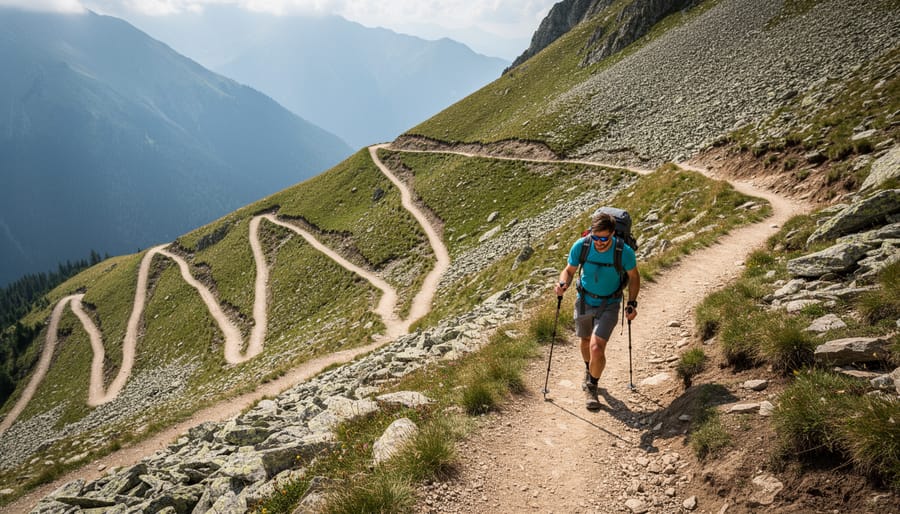
A switchback is a trail feature designed to ease the climb on steep terrain by creating a zig-zag pattern up a hillside or mountainside. Rather than forcing hikers to scramble vertically up the steepest sections, the trail cuts sharply from one direction to another, folding back on itself horizontally to make the ascent manageable.
When you approach a switchback section on Northern Ontario’s rugged trails, you’ll see the path turn sharply, often nearly 180 degrees, before continuing upward in the opposite direction. This back-and-forth pattern repeats as many times as needed to conquer the slope. The visual effect resembles a series of horizontal shelves carved into the mountainside, each one gaining elevation gradually rather than all at once.
- Switchback
- A sharp reversal in trail direction, typically close to 180 degrees, that allows a path to gain elevation gradually on steep terrain.
- Grade
- The steepness or incline of a trail section, which switchbacks are specifically designed to reduce to a comfortable hiking angle.
- Platform
- A small, constructed flat area where the trail reverses direction, providing stable footing for hikers to make the turn safely.
- Cut-back
- The sharp turn itself where the trail doubles back, named for how it cuts across the slope in the opposite direction.
What makes switchbacks effective is how they transform a grueling vertical challenge into a series of shorter, easier steps. Instead of hauling yourself straight up a steep grade, you walk a longer horizontal distance at a gentler angle. This design follows natural grade lines and allows hikers to maintain a steady, sustainable pace even on Northern Ontario’s most challenging climbs. The trail builders cut these patterns deliberately when the trails were originally constructed, choosing locations where the terrain offered the gentlest available slope for each reversal.
How Switchbacks Work on the Trail
The Zig-Zag Pattern Explained
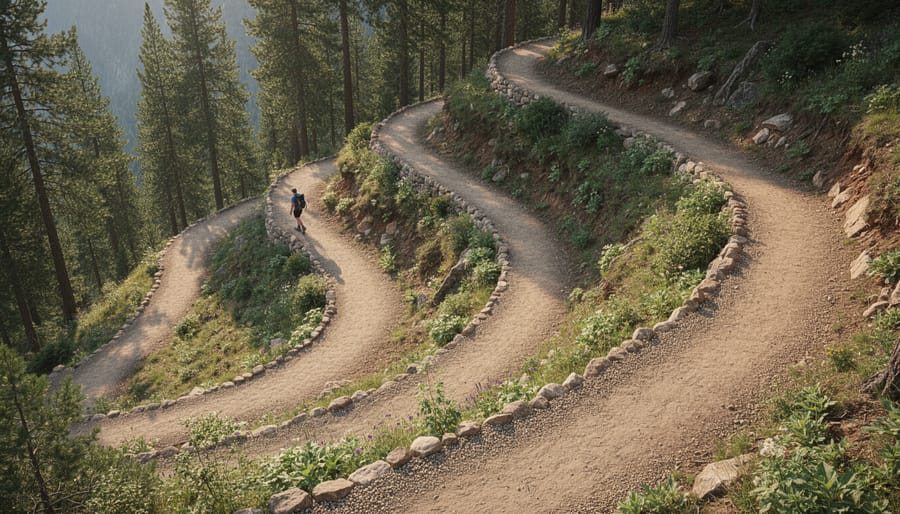
The defining feature of a switchback is its sharp reversal. Rather than running straight up a steep slope, the trail travels diagonally across the face of the incline, then doubles back on itself at an acute angle, often nearly 180 degrees, to climb in the opposite direction. This creates the classic zig-zag profile hikers recognize from below. Each leg of the switchback gains elevation gradually before pivoting at a turn platform and reversing course. The pattern repeats as many times as needed to reach the top, with each horizontal traverse keeping the grade manageable. On Northern Ontario’s steep ridges, you might count a dozen or more switchbacks stacked vertically as the trail folds back and forth up the mountainside, transforming what would be a punishing vertical scramble into a series of moderate, walkable segments.
Grade Management and Effort Reduction
Walking a switchback trail requires patience, but your body will thank you. When you climb straight up a steep slope, each step forces your legs to lift your full weight against gravity at maximum resistance. Your heart rate spikes, your breathing becomes labored, and your leg muscles fatigue quickly, sometimes within minutes on Northern Ontario’s demanding rock faces and forested ridges.
Switchbacks change the equation by following a grade line that keeps the slope manageable. Instead of hauling yourself vertically, you take shorter, easier steps at a consistent angle your body can sustain for hours. The designed path allows you to maintain a steady rhythm and conserve energy across long climbs like those found on the Cup and Saucer Trail or Dorion Tower Trail, where elevation gains can exceed 200 metres.
The difference becomes obvious when you watch hikers who attempt shortcuts. They arrive at the top gasping and exhausted while those who followed the switchbacks ascend comfortably, often carrying on conversations. The trail folds the mountain horizontally so your effort spreads across distance rather than concentrating it into brutal vertical bursts. That’s not laziness, it’s smart hiking that lets you enjoy the journey and complete longer routes safely.
Types of Switchback Features
Trail builders tailor switchback designs to fit the terrain, the grade, and the expected use. Across Northern Ontario’s varied landscapes, from the rocky ridges of the Lake Superior shore to the rolling hills of the boreal interior, you’ll encounter several distinct switchback configurations, each serving a specific purpose.
Tightly-stacked switchbacks appear on the steepest climbs, where trail maintainers fold the path back on itself every few dozen meters. These create a compact zig-zag pattern up a steep face, allowing hikers to gain elevation steadily without attacking the slope head-on. You’ll find this configuration on many of the region’s mountainous trails, where the terrain climbs sharply and space is limited.
Widely-spaced switchbacks stretch across more moderate slopes. Here, each leg of the trail runs longer before reversing direction, giving you more time to settle into a rhythm between turns. These feel less abrupt than tight switchbacks and often follow the natural contours of the land, reflecting the principles of Indigenous stewardship that emphasize working with the landscape rather than against it.
Common switchback variations you’ll encounter include:
- Tight switchbacks with frequent reversals on very steep grades
- Gradual switchbacks with longer runs between turns on moderate slopes
- Platform-based reversals using constructed, level turnaround points
- Naturally contoured switchbacks following existing slope features versus constructed cuts reshaping the hillside
Platform reversals represent a deliberate construction choice. Trail crews build a small, level platform where the trail changes direction, giving you a stable spot to turn and adjust your footing. These constructed features are common on well-maintained trails and require more effort to build, but they provide consistent, predictable turning points that reduce erosion at the reversal.
Why Trails Are Built with Switchbacks
Erosion Control and Environmental Protection
Trail builders incorporated switchbacks into original route designs specifically to prevent the rapid erosion that plagues straight-line paths. When water runs downhill, it follows the easiest course, if that course is a trail climbing directly up a slope, the trail becomes a streambed during rain. Runoff gains speed and force on straight ascents, carving deep channels and washing away soil with each storm. Switchbacks interrupt this flow by angling across the slope rather than straight down it, dispersing water energy and allowing runoff to sheet off the trail instead of concentrating into destructive torrents.
Trail designers locate on gentlest slopes available when cutting switchbacks, further minimizing disturbance to Northern Ontario’s thin soils and exposed bedrock. In the region’s boreal forests and rocky terrain, soil formation occurs slowly, often over centuries, making erosion damage particularly lasting. Properly constructed switchbacks reduce impacts by keeping foot traffic on hardened tread rather than spreading it across fragile vegetation and moss-covered rock. The gentle grades also prevent hikers from creating alternate routes when the trail feels too steep, a key consideration in protecting the delicate understory plants and lichen communities that stabilize Northern Ontario’s thin forest soils.
Accessibility and Hiker Safety
Switchbacks transform routes that would otherwise demand scrambling or rock-climbing skills into manageable trails for hikers with different fitness levels and experience. By breaking a steep climb into a series of moderate grades, switchbacks let families, older adults, and those building endurance tackle terrain that a direct ascent would place out of reach. Each zig-zag leg keeps the slope gentle enough for steady footing and controlled breathing rather than forcing vertical lunges that quickly exhaust muscles and tax cardiovascular systems.
Safety improves dramatically on descents, where steep straight paths invite slips, twisted ankles, and knee strain. Switchbacks spread the vertical drop across a longer horizontal distance, so hikers can plant their feet securely with each step instead of bracing against gravity on a plunging slope. The designed grade reduces the jarring impact on joints that comes from descending sharply, protecting knees and hips over the course of a long hike through Northern Ontario’s rocky, uneven backcountry. This thoughtful design means more people can safely explore challenging landscapes without risking injury or exhaustion.
How Switchbacks Are Constructed and Maintained
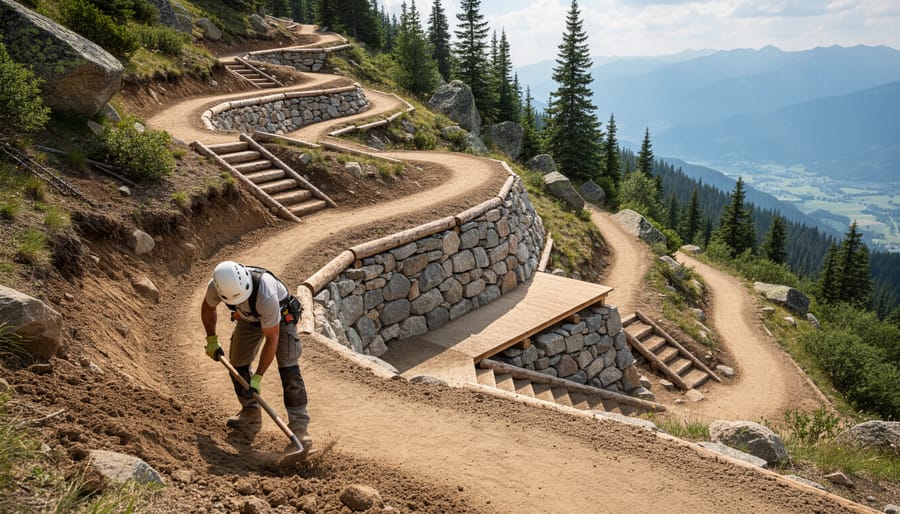
Building a switchback requires careful planning and skilled labor by trail crews who assess the landscape before cutting a single path. Maintainers locate switchbacks on the gentlest available slope within a steep section, studying the terrain to find natural benches or gradual transitions where the trail can reverse direction without creating unstable footing. Rather than forcing a sharp turn on the steepest pitch, experienced builders seek spots where they can use constructed direction reversals, small, level platforms that let hikers pivot comfortably from one leg of the trail to the next.
Construction begins with clearing vegetation and removing loose rock, then shaping the tread to match the surrounding grade. The platform at each turn is often reinforced with stone or compacted soil to prevent erosion and provide solid footing during the pivot. Trail crews in Northern Ontario face unique challenges: rocky Canadian Shield terrain demands hand tools and patience, while boreal forests require minimal disturbance to fragile moss layers and root systems that stabilize the soil.
Maintenance is ongoing. Crews monitor for erosion along the outer edges of turns, repair drainage features that channel water away from the tread, and trim encroaching brush that obscures the intended path. This work reflects both practical trail management and respect for the land, many Northern Ontario trails cross Indigenous territories where conservation efforts honor traditional stewardship values. The result is a durable, low-impact route that guides hikers safely up steep climbs while protecting the landscape for future generations.
Why You Shouldn’t Cut Switchbacks
Cutting switchbacks, taking the straight route up or down instead of following the designed zig-zag, damages trails and surrounding ecosystems in ways that compound over time. When hikers shortcut between switchback turns, they create unofficial paths that funnel water runoff, accelerate erosion, and strip vegetation from slopes. These eroded scars widen with each subsequent hiker, eventually destabilizing the hillside and forcing trail crews to rebuild sections that could have lasted decades. The environmental cost is particularly high in Northern Ontario’s boreal forests, where thin topsoil and slow-growing vegetation can take years to recover from even minor disturbance.
Switchback shortcuts also disrespect the work of trail maintainers who carefully sited these features to avoid steep slope impacts and protect fragile terrain. On Indigenous lands in Northern Ontario, cutting switchbacks violates principles of sustainable trail use that honor the relationship between hikers and the land. Following respect nature etiquette means staying on designated paths, even when the zig-zag feels inefficient. Shortcuts don’t actually save significant time, and they compromise hiking safety tips by creating unstable footing on steep, uncontrolled grades. The designed switchback is always the better choice, for the trail, the ecosystem, and your own safety.
Common Questions About Switchbacks
Hikers new to Northern Ontario’s challenging terrain often have similar questions when they first encounter switchbacks on mountain trails. These answers will help you recognize and navigate switchback sections with confidence.
What is a switchback?
A switchback is a trail feature designed to ease the ascent or descent on steep terrain, creating a zig-zag pattern up a hillside or mountainside. Instead of climbing straight up the steepest grade, the trail cuts sharply from one direction to another, folding back on itself horizontally to make the climb more manageable.
Why do trails use switchbacks?
Switchbacks follow a grade line that allows hikers to take shorter steps and saves effort over long climbs. They were built into trails to make steep ascents easier while minimizing erosion and environmental damage, particularly important in Northern Ontario’s delicate ecosystems.
Why shouldn’t you cut switchbacks?
Cutting switchbacks creates erosion channels that damage trails and surrounding vegetation, undoing the careful work of trail maintainers. Shortcuts also remove the safety benefits of the designed grade and show disrespect for Indigenous land stewardship principles.
How do you know when you’re on a switchback?
You’ll notice the trail sharply reversing direction in a zig-zag pattern on steep terrain, often with small constructed platforms at each turn. The change in direction is deliberate and distinct from gentle trail curves, sometimes requiring you to nearly double back the way you came before continuing upward or downward.
These fundamentals prepare you for Northern Ontario’s more demanding routes, whether you’re tackling gentle mountain paths or moving into terrain that approaches scramble hiking. Understanding switchbacks helps you appreciate the thoughtful design behind the region’s trail systems and supports sustainable hiking practices that protect wilderness areas for future adventurers.
Understanding switchbacks transforms them from frustrating obstacles into thoughtful trail features that protect Northern Ontario’s wilderness. When you follow a switchback’s designed path instead of cutting straight up, you’re participating in a system that’s kept these trails sustainable for decades, and one that honors the land stewardship principles practiced by Indigenous communities long before modern trail construction began.
Each switchback represents careful planning by trail builders who studied the slope, assessed erosion risk, and designed a route that would last. They’re not making your hike longer to frustrate you; they’re making it possible for everyone to access steep terrain safely while preserving the landscape for future generations.
Next time you’re zigzagging up a Northern Ontario mountainside, take a moment to appreciate the engineering beneath your feet. Those deliberate turns are protecting fragile ecosystems, preventing erosion that would eventually destroy the trail, and allowing you to experience terrain that would otherwise be impassable. Switchbacks aren’t just trail design, they’re a commitment to sustainable adventure in one of Canada’s most spectacular wilderness regions.
