The Hiking Shoes Women Are Choosing for Northern Ontario’s Rugged Trails in 2026
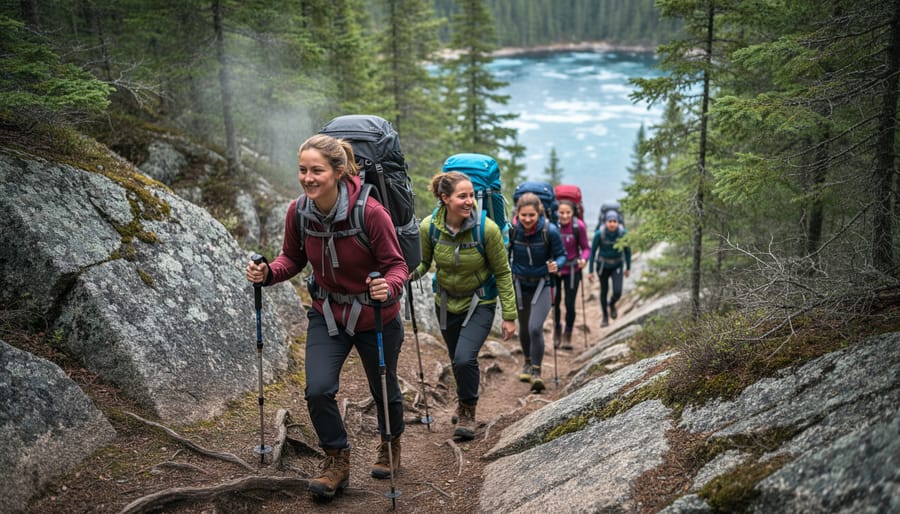
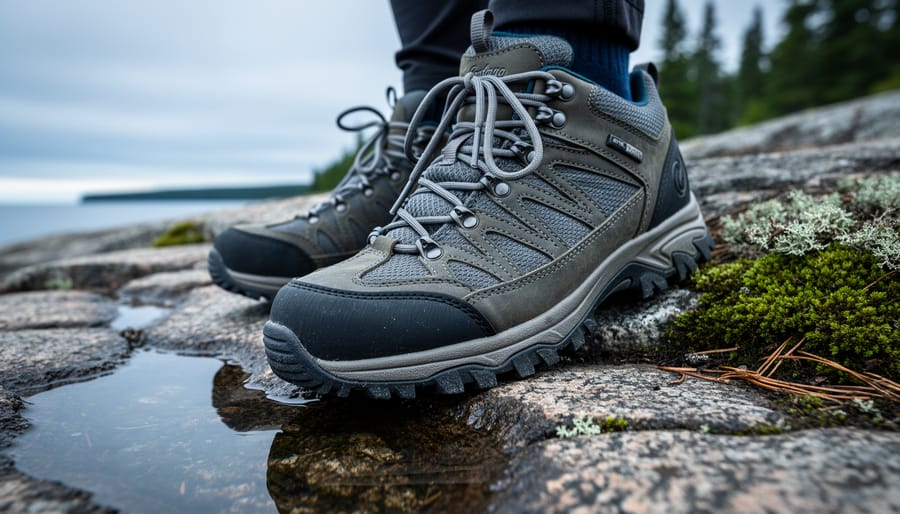
Choose your hiking shoes based on the specific trails you’ll encounter in Northern Ontario. The rocky portages of the Canadian Shield demand ankle support and aggressive treads, while bog crossings near James Bay require waterproofing that exceeds basic water resistance. Summer trails along Lake Superior’s coastline can shift from dry granite to waterlogged clay within hours, making versatility essential for any footwear investment.
Women’s hiking shoes differ fundamentally from scaled-down men’s models. The biomechanics matter here: women typically have narrower heels, higher arches, and different weight distribution patterns. A properly designed women’s shoe accounts for the Q-angle (the quadriceps angle at the knee), which affects how force travels through your foot on uneven terrain. When you’re navigating the ancient rock formations that define this region, these design differences prevent blisters, reduce knee strain, and improve stability on technical sections.
Northern Ontario’s environment presents unique challenges that generic hiking advice overlooks. The boreal forest floor stays damp well into June, and mosquito season coincides perfectly with prime hiking months. You need footwear that breathes without sacrificing protection from the relentless blackflies that swarm trailheads from May through July. Temperature swings of 20 degrees Celsius between morning and afternoon are common, demanding shoes that regulate moisture without becoming ovens by midday.
The Anishinaabe peoples have traveled these lands for thousands of years, developing footwear knowledge that modern manufacturers are only beginning to incorporate. Traditional moccasins prioritized ground feel and flexibility on rocky terrain, principles now reappearing in contemporary trail shoe design. Understanding this connection between indigenous wisdom and current footwear technology helps you make choices that respect both the land and the people who’ve sustained it.
The right shoes transform your experience from endurance test to genuine exploration. They’re the foundation of every step you take into this remarkable wilderness.
Why Northern Ontario Demands Different Footwear
Northern Ontario’s trail system presents obstacles you won’t encounter in the Rockies or the Appalachians. The Canadian Shield, ancient granite bedrock shaped by glaciers, creates exposed, unforgiving surfaces that demand footwear with aggressive traction and durable construction. Where popular hiking destinations offer maintained trails with predictable footing, Northern Ontario asks you to navigate a landscape that shifts with the seasons.
The region’s unique challenges include:
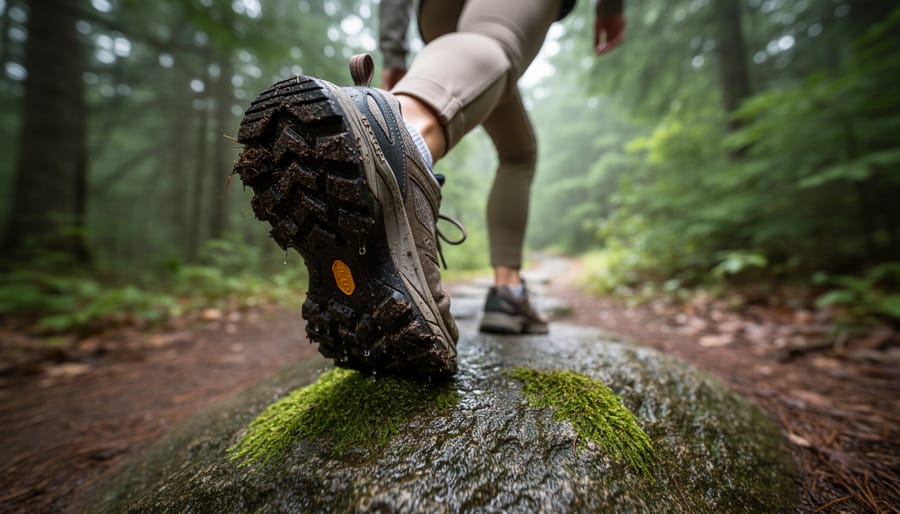
- Exposed granite slabs that become treacherously slick when wet or covered in moss
- Water levels that fluctuate dramatically between spring melt and late summer, altering trail conditions throughout the season
- Extensive root networks from boreal forest conifers that create uneven, ankle-testing footing
- Temperature swings from 5°C mornings to 25°C afternoons that affect both foot comfort and trail surface conditions
Moss-covered rocks present a particular hazard. The thin layer of vegetation that thrives on Shield granite looks deceptively solid but conceals moisture that turns stone into skating rinks. Generic hiking shoes designed for drier climates lack the specific tread patterns needed to grip these surfaces safely. Water crossings aren’t optional detours here, they’re integral to many trail systems, whether you’re stepping across spring runoff or navigating portage routes between lakes.
The boreal forest creates its own demands. Thick root systems from black spruce and jack pine form natural trip hazards, while seasonal mud in lowland areas can suck at inadequate footwear. These aren’t the groomed paths of national park showcases; they’re working trails shaped by Indigenous land stewardship practices that prioritize minimal environmental impact over hiker convenience.
This approach to trail maintenance means fewer boardwalks, fewer graded surfaces, and more direct engagement with the terrain as it exists. Sustainable trail use here requires footwear that protects your feet without requiring the landscape to be modified for your comfort. Women’s hiking shoes need to perform across this spectrum, stable enough for wet granite, protective enough for rocky portages, and breathable enough for summer heat, while being built to last through conditions that quickly expose poor construction.
What Makes Women’s Hiking Shoes Different (And Why It Matters)
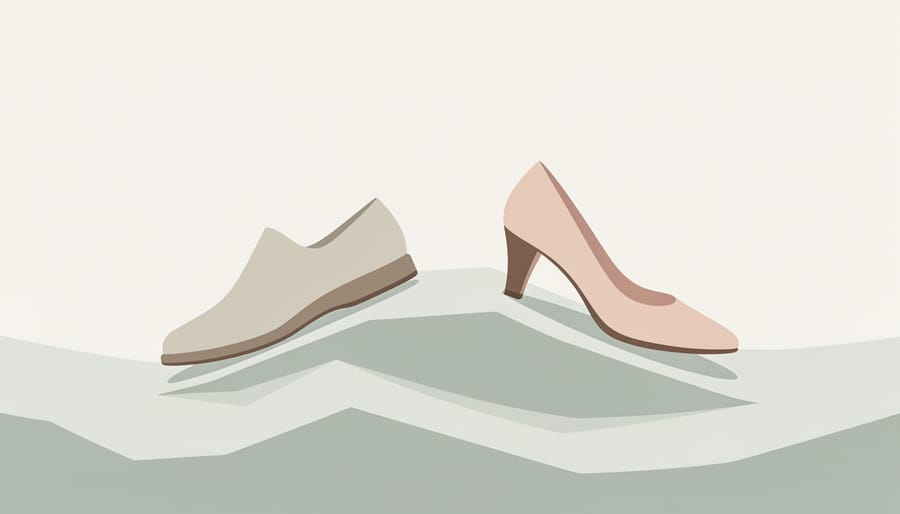
Women’s feet aren’t just smaller versions of men’s feet. The differences run deeper, affecting how your foot moves through each step on the trail and how your body absorbs impact over miles of hiking.
Women typically have narrower heels relative to the forefoot, which means a standard unisex shoe often allows heel slippage. That movement creates friction, leading to blisters on long trail days through Northern Ontario’s backcountry. Women-specific designs feature a more tapered heel cup that locks your foot in place without requiring you to overtighten laces, which can restrict circulation and cause numbness.
The arch structure differs too. Women generally have higher, more pronounced arches and greater arch flexibility. A shoe built for men’s biomechanics won’t provide the right support where you need it, potentially causing plantar fasciitis or arch fatigue when you’re navigating rocky portages or uneven terrain for hours. Proper arch support in women’s shoes helps distribute pressure more evenly across your foot, reducing fatigue and preventing injury.
Weight distribution matters more than many hikers realize. Women carry their center of gravity lower and have different hip angles, affecting how force transfers through the leg to the foot. Women’s hiking shoes account for these biomechanical patterns with different midsole densities and cushioning placement, helping absorb the repeated impact of descending granite slopes or stepping over roots.
Volume is the final piece. Women’s feet are typically lower-volume overall, meaning they have less total space from top to bottom. A men’s shoe or unisex design often feels loose and sloppy, allowing your foot to slide around inside. This becomes dangerous on technical trails where precision matters, particularly on wet moss-covered rocks common throughout the region.
Getting the fit right from the start means more comfort on day hikes and fewer problems on multi-day adventures. Your feet will thank you.
Top Performing Hiking Shoes for Women in 2026
Best All-Around: Salomon X Ultra 5 GTX
The Salomon X Ultra 5 GTX earns its best-overall ranking for good reason. It handles the specific challenges of Northern Ontario’s Canadian Shield terrain, wet granite slabs, root-crossed portages, and sudden weather shifts, without forcing you to compromise between grip, protection, and all-day comfort.
What makes this shoe work across varied conditions is its balance. The traction grips moss-slicked rocks on morning approaches and muddy portage trails after rain. The waterproofing keeps your feet dry during stream crossings and dewsoaked bushwhacking. On long trail days across uneven Shield bedrock, the support holds up without the weight penalty of traditional boots.
Expert testing confirms what Northern Ontario hikers already know: you need versatile footwear here. One day you’re scrambling over sun-warmed granite ridges; the next you’re navigating boggy sections where the water table sits just below the moss. The X Ultra 5 GTX adapts to these shifts better than shoes designed for single-terrain specialization.
If you’re planning day hikes from Thunder Bay to Temagami or multi-day backcountry routes through Quetico, this is the dependable choice that won’t limit where you explore.
Budget-Friendly Performance: Merrell Moab Speed 2
The Merrell Moab Speed 2 earns its reputation as a runner-up at a great price for good reason. When you’re planning your first backcountry adventure in Northern Ontario or locals need a dependable second pair without breaking the bank, this shoe delivers where it counts.
What makes it valuable isn’t just the lower price point, it’s that Merrell didn’t sacrifice the essentials Northern Ontario demands. The Moab Speed 2 handles wet granite and root-crossed trails with confidence, offering enough traction for stream crossings and enough support for full-day hikes around Lake Superior’s coastal routes or the Sleeping Giant’s challenging terrain.
For travelers allocating their budget across gear, accommodations, and experiences, this shoe proves you don’t need premium pricing to explore responsibly. It’s particularly smart for those testing whether hiking becomes a regular passion before investing in specialized equipment. The durability means it’ll last through multiple seasons of exploration, whether you’re tackling established trails near Thunder Bay or venturing onto less-travelled paths that demand respect for Indigenous lands and Leave No Trace principles.
Maximum Cushioning: HOKA Speedgoat 7
The HOKA Speedgoat 7 earns its reputation as the max cushion choice for women tackling Northern Ontario’s relentless rock gardens and multi-day excursions. When you’re spending eight hours navigating the granite outcrops of Lake Superior Provincial Park or carrying gear across exposed Shield terrain, that extra underfoot protection absorbs the repetitive impact that leaves knees and ankles aching by evening.
This model particularly shines for hikers over forty, those managing joint concerns, or anyone planning extended trips where fatigue compounds with each mile. The generous cushioning doesn’t sacrifice trail feel, you’ll still sense enough underfoot to adjust your stride over roots and uneven surfaces, crucial when crossing moss-slicked rocks that hide gaps and ledges.
Recent testing confirms the Speedgoat 7’s effectiveness on technical trails, making it a smart investment for the rugged conditions that define hiking here. The trade-off? Slightly more weight than minimalist alternatives. For day hikers on well-maintained trails, that bulk may feel excessive. But when you’re three days into a backcountry route with a loaded pack, watching scrambling partners wince with each descent, the cushioning justifies itself.
Other Notable Options for 2026
Beyond the top performers, three models stand out for specific needs on Northern Ontario’s diverse terrain. The Altra Olympus 6, newly added to expert testing this spring, offers a generous toe box and FootShape design that accommodates wider feet without sacrificing stability on uneven Shield rock. If you’ve struggled with narrow shoes on long trail days, this model deserves attention.
For technical scrambles over exposed granite and root-laden sections, the updated Saucony Peregrine delivers aggressive traction where precision matters most. It’s lighter and nimbler than all-around models, ideal for experienced hikers tackling challenging backcountry routes.
The Adidas Terrex Free Hiker 2.0 Low GTX, also featured in recent 2026 updates, prioritizes waterproof protection for hikers who frequently encounter stream crossings, early-morning dew on portage trails, or unpredictable weather systems rolling across the boreal forest. Each addresses a specific hiking reality in this region, reminding us that the “perfect” shoe ultimately depends on your foot shape and where Northern Ontario’s trails take you.
Essential Features for Northern Ontario Trail Conditions
Northern Ontario’s trails throw everything at you: the ancient Canadian Shield’s granite slabs turn treacherous with morning dew, moss-covered rocks demand precision footwork, and sudden afternoon storms can transform dry paths into muddy obstacle courses. Your hiking shoes need to handle all of it without falling apart.
**Traction That Grips Wet Granite**
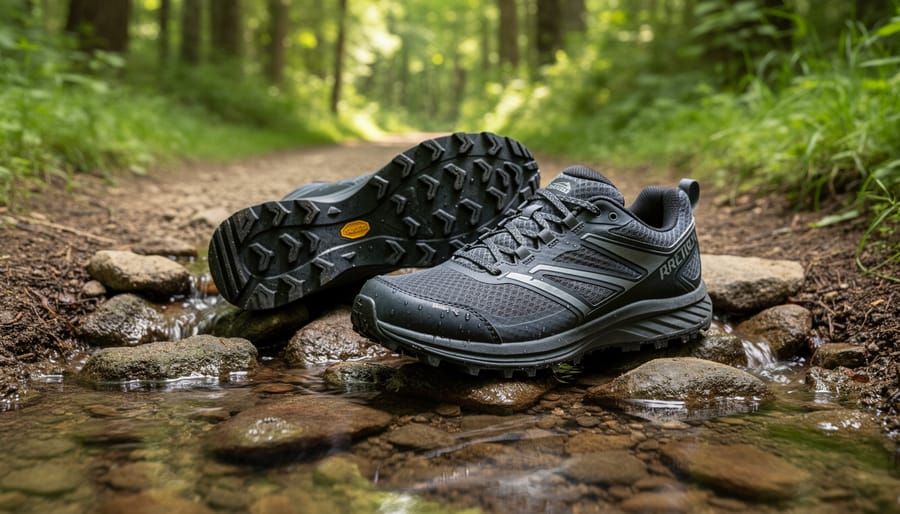
Shallow, worn-out lugs slip on wet rock, it’s that simple. Look for aggressive tread patterns with multidirectional lugs that bite into moss and channel water away from the sole. The Canadian Shield’s smooth granite becomes glass-like when wet, so the rubber compound matters as much as the tread design. Softer rubber grips better but wears faster, which becomes a trade-off worth considering if you’re planning multiple trips throughout the season.
**Water Resistance Without the Sauna Effect**
Stream crossings, boggy sections near beaver ponds, and dew-soaked vegetation in the morning hours mean your feet will get wet. Waterproof membranes keep exterior moisture out while letting sweat vapor escape, though nothing stays perfectly dry during a full day on the trail. Some hikers prefer water-resistant treatments that dry quickly over fully waterproof options, especially during July and August heat. The choice depends on your tolerance for wet feet versus sweaty feet.
- GTX (Gore-Tex waterproofing)
- A breathable membrane that blocks liquid water while allowing sweat vapor to escape, keeping feet drier in wet conditions. Found in many premium hiking shoes designed for Canadian weather.
- Lug depth
- The height of the tread pattern on the sole, typically 3-5mm for hiking shoes. Deeper lugs provide better traction on mud and loose terrain but wear down faster on rock.
- Toe box volume
- The internal space around your toes, critical for downhill comfort and preventing blisters. Women’s shoes often have narrower toe boxes than unisex models.
- Heel counter
- The rigid cup that wraps around your heel to prevent side-to-side movement and improve stability. A supportive heel counter reduces ankle fatigue on uneven terrain.
- Rock plate
- A semi-rigid layer between the midsole and outsole that protects your feet from sharp rocks and roots. Essential for the Shield’s exposed granite and angular stones.
**Support for Uneven, Root-Crossed Terrain**
The trails here aren’t groomed, they’re carved through forest floors webbed with tree roots and scattered with glacial erratics. A supportive midsole cushions your feet against repeated rock impacts, while a stable platform prevents ankle rolls when you step on uneven surfaces. Stiffer shoes offer more protection but less ground feel, which matters when you’re reading the trail ahead and placing each step deliberately.
**Breathability for Summer’s Unexpected Heat**
Northern Ontario summers get hot, and hiking generates serious body heat even when the temperature seems moderate. Mesh panels allow airflow, though they compromise water resistance. If you’re hiking primarily during warm, dry periods, prioritize ventilation over waterproofing. For shoulder-season trips when conditions vary, the balance shifts.
**Durability and Environmental Responsibility**
Sharp granite edges shred inferior materials within a season. Quality construction, reinforced toe caps, abrasion-resistant uppers, replaceable insoles, extends shoe lifespan and reduces waste. Choosing repairable designs over disposable ones aligns with the Indigenous principle of using resources responsibly. A pair that lasts three seasons instead of one means fewer shoes in landfills and more money for actual trail time.
Fitting Your Hiking Shoes: What Works on the Shield
Getting the fit right matters more on the Canadian Shield than almost anywhere else. Your feet will swell during long days navigating rocky portages and uneven granite slopes, so size up a half size from your street shoes. This extra room prevents black toenails on steep descents and accommodates the thicker hiking socks you’ll need for cushioning against the Shield’s relentless rockface.
Always test shoes with the actual socks you’ll wear on the trail. Thin athletic socks change how your foot sits in the shoe compared to merino wool hiking socks. Walk around the store on inclines if possible, or create makeshift uneven surfaces at home by stepping on books or curbs. Your heel should stay locked while your toes have wiggle room when pointed downhill.
The best fitting happens in the afternoon when your feet are slightly swollen, mimicking trail conditions. Lace the shoes fully and check for pressure points around your ankle bones and the top of your foot. If you feel hot spots in the store, they’ll become blisters ten kilometers into a day hike.
When planning your gear, incorporate these footwear considerations into your broader packing tips to ensure your entire kit works together for Shield conditions.
Proper footwear connects directly to trail ethics. Shoes with aggressive, deep lugs damage fragile moss and lichen on Indigenous lands and protected areas. Choose tread patterns that grip without gouging. Stay on established paths to minimize your impact, and respect nature by understanding that your footwear choices affect the land’s ability to sustain itself. Well-fitted shoes keep you stable and less likely to step off-trail, protecting the slow-growing vegetation that defines the Shield’s ecosystem.
When to Choose Hiking Shoes vs. Boots on Northern Ontario Trails
The choice between hiking shoes and boots on Northern Ontario’s trails comes down to your specific route, pack weight, and the season you’re exploring. Low-cut hiking shoes excel on well-maintained trails like those around Lake Superior Provincial Park or the Sleeping Giant, where you’ll encounter rocky sections but won’t be bushwhacking through unmarked wilderness. They’re lighter, more breathable during July and August heat, and allow your ankles natural range of motion on technical footwork across granite slabs.
Mid or high-cut boots make more sense when you’re carrying a heavier pack for multi-day backcountry trips, navigating off-trail sections where ankle-twisting roots hide under moss, or hiking during spring melt and fall when water crossings become more frequent. Local outfitters in places like Temagami and Wawa consistently recommend boots for portage-heavy canoe trips, where you’re stepping in and out of boats on slippery rocks with gear on your back.
- Lighter weight reduces fatigue on long day hikes across the Shield.
- Better breathability prevents overheating during summer trail conditions.
- Faster break-in period means less risk of blisters on your first outings.
- More agile for technical footwork on exposed granite sections.
- Less ankle support on uneven terrain with heavy packs.
- Lower cut allows debris, water, and insects easier entry.
- Reduced protection from sharp rocks and roots on rugged routes.
- Can feel less stable during stream crossings on moss-covered stones.
Your fitness level matters too. Stronger ankles from regular hiking can handle shoes on terrain where occasional hikers benefit from boot support. Consider reviewing Northern Ontario safety tips before heading out, as proper footwear choices directly impact your ability to respond to changing trail conditions and unexpected weather that defines this region’s wilderness character.
The trails that wind through Northern Ontario’s ancient landscapes, across granite ridges shaped over billions of years, through forests that have stood for centuries, demand respect. They also demand the right footwear. Choosing quality women-specific hiking shoes isn’t just about comfort during your adventure; it’s about safety, sustainability, and honoring the land you’re walking on.
Proper footwear protects both you and the trails. Shoes designed for women’s biomechanics reduce injury risk on challenging terrain, while durable, well-fitted footwear minimizes trail erosion, a key consideration when exploring paths that Indigenous communities have stewarded for generations. The investment you make in quality hiking shoes supports longer-lasting gear that doesn’t end up in landfills after a single season.
As you plan your Northern Ontario adventure, remember that these trails are more than recreational spaces. They’re part of living Indigenous territories with deep cultural significance. Choosing the right shoes means you can explore confidently while practicing Leave No Trace principles, respecting trail closures, and supporting local conservation efforts.
The wilderness here rewards preparation. With women’s hiking shoes built for the Shield’s unique demands, you’re ready to experience everything from sunrise paddles to ridge-top vistas, safely, sustainably, and with the confidence that comes from proper gear. The trails are waiting.