
Why Hiking in French Opens Northern Ontario’s Wild Heart Like Nothing Else
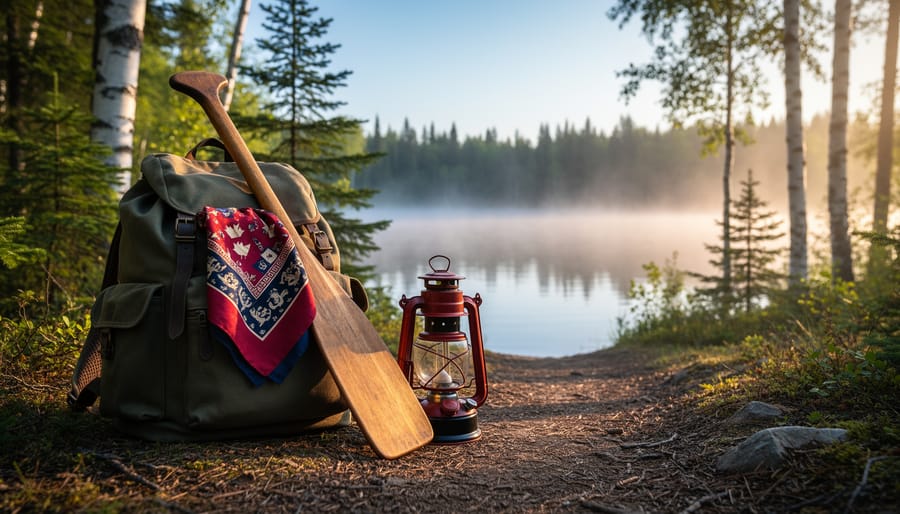
The boreal forests of Northern Ontario whisper stories in two languages. When Jesuit missionaries and voyageurs first paddled these waterways in the 1600s, they carried French words that still echo across the region’s trails today. Franco-Ontarian communities have shaped this wilderness for generations, and their cultural footprint offers modern hikers something rare: a chance to experience Canada’s backcountry through a distinctly French lens while honoring the Anishinaabe, Cree, and Mushkegowuk peoples whose ancestral lands these trails cross.
French-language hiking in Northern Ontario isn’t about translation apps or dubbed trail maps. It’s about discovering communities where French remains the living language of fire towers, portage routes, and fishing camps. Towns like Hearst, Kapuskasing, and Cochrane serve as gateways to trails where bilingual signage tells stories of fur trade routes and logging heritage. You’ll find interpretive centers operated by Francophone guides who grew up fishing these lakes, conservation areas where French environmental education programs run alongside Indigenous knowledge-sharing initiatives, and backcountry experiences where your trail companions might switch seamlessly between French, English, and Oji-Cree.
This cultural dimension transforms ordinary hikes into something deeper. Walking the same paths that coureurs de bois once traveled connects you to a specific chapter of wilderness history, while engaging with today’s Franco-Ontarian outdoor community reveals how French culture continues adapting to northern realities. The region’s commitment to trilingual trail stewardship, bringing together French, English, and Indigenous perspectives, creates hiking experiences you won’t find anywhere else in Canada.
Whether you’re a Francophone seeking trails where your language feels at home or an adventurer curious about Northern Ontario’s layered heritage, this approach opens doors most visitors never notice.
The Franco-Ontarian Trail Network: Where French Meets Wilderness
Northern Ontario’s Franco-Ontarian communities have walked these forests for generations, and their trails tell stories you won’t find anywhere else in Canada. Towns like Hearst, Kapuskasing, and Cochrane, where French remains the daily language, have transformed their deep-rooted relationship with the land into hiking experiences that blend wilderness exploration with living francophone culture.
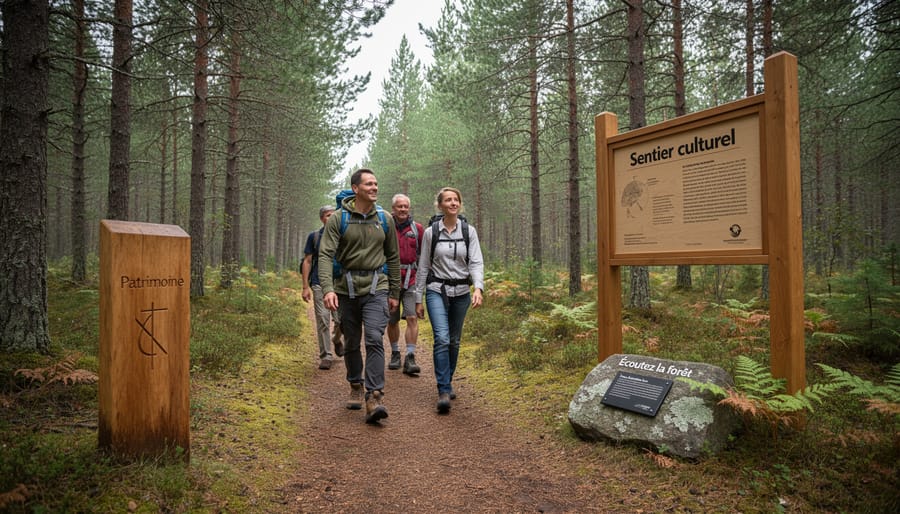
In Hearst, the Sentier récréatif stretches through black spruce forests where trail markers explain the logging heritage in French first, English second. The language isn’t just translation; it carries the weight of families who’ve worked this boreal landscape since the early 1900s. Local guides weave in French trappers’ terms for animal tracks, weather patterns, and seasonal changes that sound clumsy in English but perfectly capture what you’re seeing underfoot.
Kapuskasing’s trail system runs alongside the river that gave the town its Cree name, and here you’ll notice something remarkable: signage often appears in three languages, French, English, and Cree syllabics. Franco-Ontarian trail stewards have built partnerships with nearby Indigenous communities, creating interpretation that honors both the French settlers who arrived a century ago and the Mushkegowuk peoples who’ve known these waterways for thousands of years. A portage route isn’t just a portage; it’s a corridor of shared history explained through bilingual storytelling.
The trails around Cochrane venture into muskeg and peatlands where French ecological vocabulary becomes essential. There’s no good English equivalent for épinette noire when you’re standing among stunted black spruce adapted to acidic soil, or tourbière for the spongy bog systems that define this landscape. Franco-Ontarian naturalists have developed trail programs using these precise terms, helping hikers grasp ecosystem dynamics that generic English descriptions often miss.
What sets this network apart isn’t just language on signs. It’s the cultural context carried by francophone guides who grew up hunting these woods with their grandparents, who know which berries the old-timers picked for preserves, who can explain why certain trails follow routes carved by French-Canadian railroad workers. When you hike here in French, you’re accessing a parallel wilderness narrative that’s been unfolding quietly while English Canada looked elsewhere.
What French-Language Hiking Brings to Your Northern Ontario Adventure
Indigenous Voices in French Trail Interpretation
Several Northern Ontario trail systems now weave together Anishinaabe, Cree, Oji-Cree, and French voices to create interpretive experiences that honor multiple layers of land knowledge. Parks in regions like Moosonee and Moose Factory have developed signage and audio guides that present traditional ecological knowledge in Indigenous languages first, followed by French and English translations. This approach positions ancestral wisdom as primary rather than supplementary.
The Sioux Lookout Meno Ya Win Health Centre’s traditional trilingual language services model demonstrates how cultural institutions throughout the region increasingly recognize French as a bridge language between Indigenous communities and broader audiences. On trails, francophone guides often work alongside Indigenous knowledge keepers, translating concepts like seasonal medicines, portage routes, and wildlife migration patterns that hold different nuances in each language.
This trilingual framework enriches the Indigenous cultural context by acknowledging that French-speaking settlers learned navigation, survival techniques, and environmental stewardship from First Nations teachers. Many Franco-Ontarian families maintain intergenerational knowledge passed down through these relationships. When you encounter trail markers naming a wetland “la musquière” while simultaneously presenting the Cree term and explaining its role in traditional trapping cycles, you’re experiencing how languages layer meaning onto landscape. These collaborative interpretive programs don’t just translate words, they reveal how different cultural lenses observe, respect, and relate to the same forest.
Environmental Storytelling Through French Wilderness Vocabulary
French wilderness vocabulary transforms how we perceive Northern Ontario’s ecosystems, revealing layers of meaning often lost in English-only interpretation. When Franco-Ontarian guides describe a *forêt boréale* (boreal forest), they’re not just translating a term, they’re invoking a specific relationship to the land shaped by centuries of French-Canadian survival and stewardship in these northern forests. The word *tourbière* (peatland or muskeg) carries connotations of both challenge and resource that reflect how francophone communities historically navigated and utilized these waterlogged landscapes.
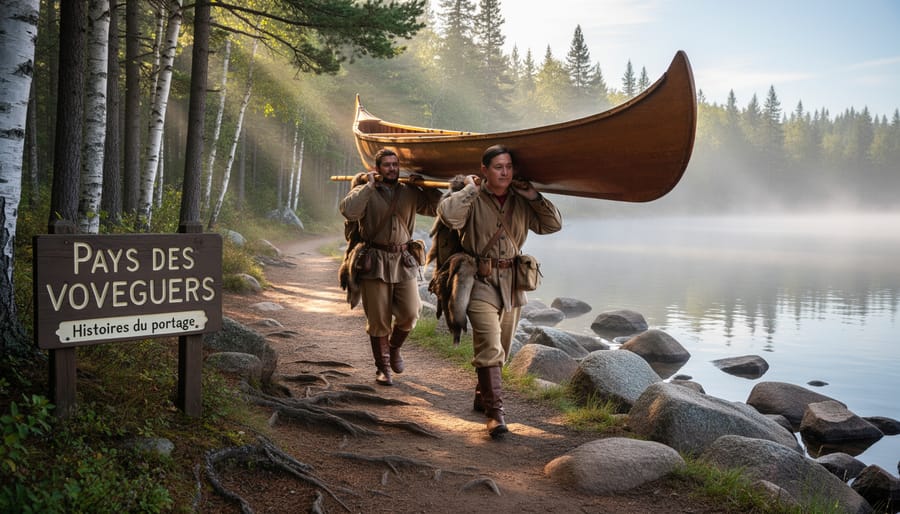
Terms like *portage* (already borrowed into English) reveal deeper ecological understanding when used in their original French context. A portage isn’t merely a carry between water bodies, it’s a *corridor écologique* that wildlife and humans have shared for millennia, a concept Franco-Ontarian interpreters emphasize when teaching respect nature etiquette on Northern Ontario trails. French ecological vocabulary like *couvert forestier* (forest canopy) or *sous-bois* (understory) encourages hikers to observe ecosystems in vertical layers rather than as flat scenery.
This linguistic precision extends to sustainability practices. When francophone guides discuss *gestion durable des ressources* (sustainable resource management), they connect modern conservation to traditional Franco-Ontarian practices like selective harvesting and seasonal rotation. The language itself becomes a teaching tool, making environmental stewardship feel less like abstract policy and more like inherited wisdom passed through specific, evocative words.
Learning from French Hiking Culture: Provence to the Boreal
French hiking culture has spent centuries perfecting the art of marche lente, slow walking that prioritizes connection over conquest. Tours like France Hiking: Provence & the Riviera embody this philosophy, guiding groups of 5-20 travelers through lavender fields and coastal paths over 8 days (or 10 with the Nice extension) for around $4,929. But the real lesson isn’t about specific destinations. It’s about how French hikers approach the trail itself: as a conversation between landscape, culture, and community rather than a fitness challenge to dominate.
Northern Ontario’s Franco-Ontarian trails share surprising DNA with their Provençal cousins, despite swapping Mediterranean sun for boreal twilight. Both traditions treat hiking as an act of cultural preservation, weaving together language, cuisine, and environmental knowledge into each footstep. The principles translate remarkably well when you shift your expectations from Instagram-worthy summits to deep-time engagement with place.
| Element | Provence Model | Northern Ontario Adaptation |
|---|---|---|
| Terrain Focus | Mediterranean garrigue, limestone gorges, vineyard paths | Boreal forest, muskeg wetlands, granite shield outcrops |
| Cultural Integration | Village markets, château visits, wine tastings | Franco-Ontarian boulangeries, lumber heritage sites, tourtière picnics |
| Pace & Distance | 12-15 km daily, multi-hour lunch breaks | 8-12 km with extended wildlife observation, storytelling pauses |
| Environmental Ethic | Mediterranean ecosystem conservation, traditional agriculture | Boreal protection, Indigenous land stewardship, fire ecology understanding |
The French concept of randonnée pédestre, hiking as a complete sensory and intellectual experience, asks you to taste wild blueberries instead of just photographing them, to learn why this grove of trembling aspen speaks to Cree cosmology, to understand how Franco-Ontarian trappers read winter ice. It’s hiking that builds relationships rather than collecting trail badges. When you apply that mindset to Northern Ontario’s wilderness, suddenly a modest 10-kilometer loop near Hearst becomes as rich as any Alpine traverse, because you’re finally paying attention to everything the landscape wants to teach you.
Planning Your French-Language Hiking Experience in Northern Ontario
French-Speaking Guides and Tour Operators
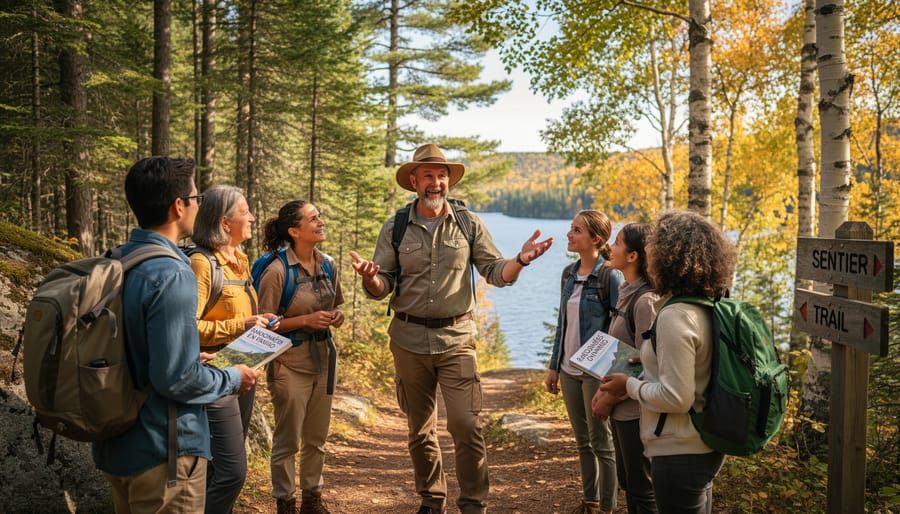
Connecting with francophone guides in Northern Ontario takes a bit of advance planning, but the reward is worth it. Start by contacting Ontario’s Fédération des Francophones du Nord-Ouest de l’Ontario or the Association française des municipalités de l’Ontario, both of which maintain directories of French-speaking outdoor professionals. Several outfitters in Hearst and Kapuskasing offer guided wilderness excursions with bilingual or exclusively francophone interpreters who specialize in boreal forest ecology and Franco-Ontarian heritage.
For provincial parks, call ahead to request French interpretation. Killarney, Grundy Lake, and René Brunelle provincial parks all have staff who can arrange francophone naturalist programs during summer months, though availability varies by season. Submit your request at least two weeks before your visit.
Local chambers of commerce in Timmins, Kapuskasing, and Cochrane can connect you with independent guides certified in wilderness first aid and fluent in French. Many operate May through September and require booking before April for the 2026 season. Don’t hesitate to ask about their experience with Indigenous partnerships, as the most knowledgeable francophone guides often work closely with Anishinaabe and Cree elders who share trilingual land stories that standard English tours miss entirely.
Essential Gear and Seasonal Timing
Northern Ontario’s boreal climate demands layered preparation. Pack moisture-wicking base layers, an insulated mid-layer (une couche intermédiaire), and a waterproof shell for sudden rain (la pluie) or morning mist (la brume). Sturdy hiking boots handle varied terrain from rocky portages (les portages) to spongy muskeg (la tourbière). Review our packing tips and camping supplies guide before departure.
For French-guided hikes in 2026, target June through September when trails are most accessible and francophone guides operate full schedules. July and August offer warm days (les journées chaudes) and extended daylight, ideal for beginners. September brings stunning fall colors (les couleurs d’automne) and fewer insects (moins d’insectes), though nights turn cold. Spring thaw (le dégel printanier) in May creates muddy conditions best left to experienced hikers. Always check Northern Ontario safety tips regarding wildlife awareness and weather changes before setting out.
Beyond the Trail: French Cultural Experiences in Northern Ontario
Your French-language hiking adventure needn’t end when you leave the trail. Northern Ontario’s Franco-Ontarian communities offer rich cultural touchstones that bring context and color to the wilderness you’ve explored, turning a hiking trip into genuine immersion.
Start with the region’s vibrant festival calendar. Hearst hosts the Festival Boréal each summer, celebrating Franco-Ontarian music and storytelling against a backdrop of boreal forest. Kapuskasing’s Lumberjack Heritage Festival honors the logging traditions that shaped Franco-Ontarian settlement, complete with axe-throwing competitions and traditional songs. Cochrane’s Polar Bear Habitat features bilingual interpretation that connects French naturalist traditions to Arctic wildlife conservation. These events transform abstract cultural knowledge into lived experience, grounding the French perspectives you encountered on the trail.
The region’s cuisine tells its own story of adaptation and resilience. Franco-Ontarian restaurants serve tourtière made with wild game, pea soup enriched with local ingredients, and sugar pie that tastes better after a long day on the trail. Many establishments source from Indigenous producers, creating a culinary bridge between French and First Nations traditions.
Heritage sites provide historical depth. The Mattice-Val Côté Museum preserves the story of French-speaking settlers navigating the northern wilderness. Timmins’ Underground Mine Tour offers French-language tours that reveal how Franco-Ontarians shaped the region’s economy while maintaining their linguistic identity. These stops aren’t tourist add-ons, they’re essential pieces of understanding why French thrives in Northern Ontario’s wilderness and how that linguistic heritage continues to shape environmental stewardship today.
When you step onto a Northern Ontario trail with French as your companion, you’re not just hiking, you’re entering a three-way conversation between language, land, and legacy. The Franco-Ontarian wilderness experience dissolves the boundary between physical journey and cultural discovery, transforming each portage into a passage through history, each forest path into a story written in three languages. You’ll find yourself hearing the land differently, noticing how French and Indigenous vocabularies for rock, water, and sky reveal what English sometimes overlooks.
This isn’t about checking off trail kilometres. It’s about slowing down enough to understand why certain places carry the names they do, why francophone guides read animal signs with a different rhythm, why sustainability conversations deepen when conducted in the language that first mapped these territories alongside Indigenous stewardship. The boreal forest doesn’t change when you speak French, but your relationship to it does.
Northern Ontario’s French trails are waiting for you in 2026, offering something increasingly rare: wilderness that carries memory, guides who inhabit rather than just traverse the landscape, and trails where every step connects you to something larger than recreation. Pack your boots, brush up on your français, and prepare for the kind of hiking that changes how you see wild places everywhere else.
