
Trekking vs Hiking in Northern Ontario’s Subarctic: What Cold-Weather Explorers Must Know
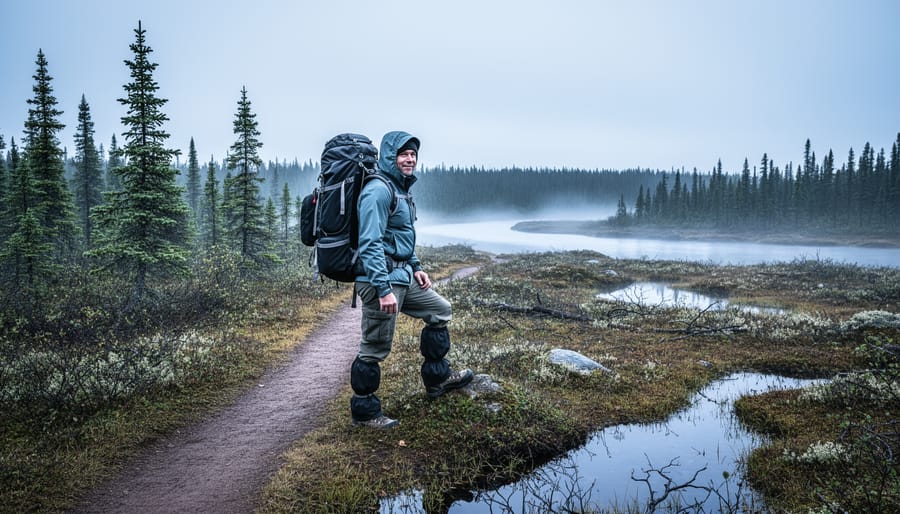
Stand at the trailhead in Northern Ontario’s boreal wilderness, and the question becomes more than semantic. Whether you’re planning a morning walk through the forests near Thunder Bay or a multi-day journey into the remote reaches of the Canadian Shield, understanding the distinction between hiking and trekking could mean the difference between an exhilarating adventure and a dangerous miscalculation.
Hiking typically means a day trip on marked trails, returning to your vehicle or accommodation by nightfall. You’ll carry lunch, water, and basic gear. Trekking demands more commitment: overnight camping, potentially several days in the backcountry, and the self-sufficiency to handle whatever Northern Ontario throws at you. The boreal forest doesn’t offer the convenience of mountain huts you might find in the Alps. Out here, you’re navigating muskeg, river crossings, and weather that can shift from sunshine to sleet in June.
This landscape intensifies every choice you make. The same trail that offers pleasant hiking in August becomes a serious trekking challenge when black flies swarm in late May or when you’re crossing beaver-flooded lowlands with a 40-pound pack. Distance alone doesn’t define the boundary. A 15-kilometer trek through trackless boreal terrain, fording creeks and reading topography, differs fundamentally from a 15-kilometer hike on the maintained paths of Sleeping Giant Provincial Park.
Understanding this distinction matters for practical reasons: permit requirements differ, gear lists diverge sharply, and the skills you need escalate accordingly. The Anishinaabe and Cree peoples have traveled these lands for millennia, reading subtle signs in the forest that modern GPS can’t replicate. Their traditional knowledge reminds us that respecting the environment starts with honest assessment of what you’re actually attempting.
Defining the Difference: Hiking vs Trekking in Subarctic Conditions
What Makes It Trekking in the North
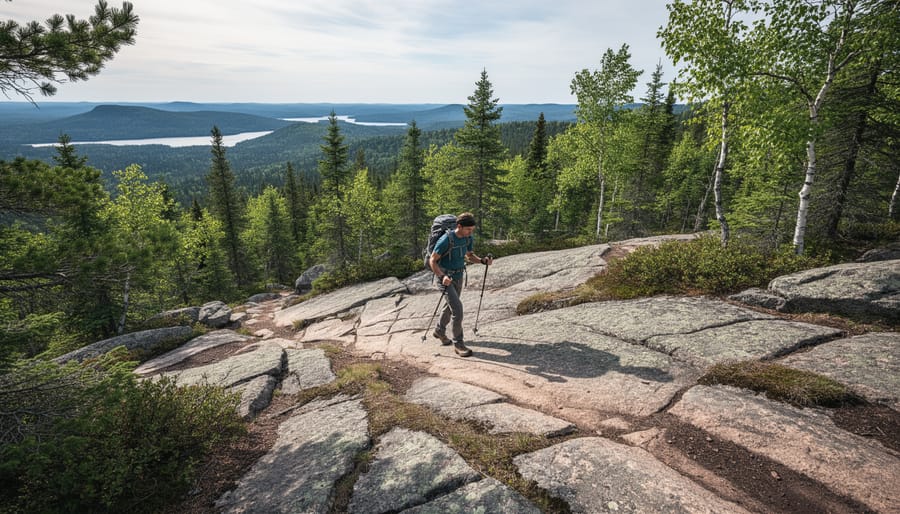
Trekking in Northern Ontario means committing to genuine wilderness immersion, far beyond the boundaries of any day trip. When you’re covering unmarked routes through dense boreal forest, navigating by topographic map and compass across terrain where the Canadian Shield’s granite outcrops interrupt trail lines, you’ve crossed into trekking territory. These expeditions typically span three to seven days, carrying you into backcountry zones where self-sufficiency isn’t optional, there’s no turning back for forgotten gear, and help can be days away.
The defining feature is remoteness. Trekking routes lead into areas without maintained trails, established campsites, or any infrastructure. You’re responsible for everything: water purification from shield lakes, food storage against bears, shelter setup in weather that can shift from sweltering humidity to near-freezing rain within hours. Northern Ontario’s subarctic character means dealing with challenges that southern hikers rarely face. Summer brings relentless black flies and mosquitoes that can drive unprepared trekkers to abandon routes. Early September can deliver unexpected snowfall. Late spring means navigating swollen creeks and boggy sections where trails disappear entirely.
Navigation through unmarked territory demands real skill. GPS coordinates help, but understanding the landscape, reading the forest, recognizing good camping spots on high ground, avoiding areas prone to flooding, requires experience you can’t download. The seasonal extremes test your preparation constantly, making multi-day trekking in this region a serious undertaking that separates casual adventurers from committed wilderness travelers.
When It’s Hiking Territory
Hiking territory in Northern Ontario means routes you can complete in a single day, returning to your vehicle or accommodation before nightfall. These are typically well-marked trails in provincial parks or conservation areas where amenities like parking, trailhead signage, and emergency access exist within reasonable distance.
Around Thunder Bay, day hikers tackle routes like the Top of the Giant at Sleeping Giant Provincial Park, a challenging but achievable 22-kilometer return journey offering dramatic Lake Superior vistas without requiring backcountry camping skills. Near Timmins and Cochrane, shorter forest loops through boreal woodland provide accessible excursions during the limited summer window. These maintained pathways suit hikers seeking the region’s natural beauty without committing to multi-day wilderness immersion.
The key distinction is infrastructure and escape options. Hiking routes keep you within range of help should weather turn or injury occur. You’ll carry water, snacks, and layers for the day, but not a tent, sleeping bag, or days’ worth of food. Most provincial park day hikes feature mapped routes with distance markers, periodic trail maintenance, and established turnaround points.
That said, Northern Ontario’s day hikes still demand serious preparation compared to southern counterparts. Even short excursions require checking weather forecasts, notifying someone of your plans, and packing emergency supplies. The boreal forest environment can disorient unfamiliar hikers quickly, and summer insects can turn a pleasant morning hike miserable by afternoon. Start with established trails before venturing into less-traveled territory.
The Subarctic Challenge: Why Northern Ontario Demands Different Preparation
Northern Ontario’s subarctic wilderness operates by different rules than temperate hiking destinations. While the region doesn’t reach true Arctic latitudes, its near-Arctic climate creates conditions that blur the line between casual hiking and serious backcountry trekking faster than anywhere else in southern Canada.
The numbers tell the story: winter temperatures regularly drop to -40°C, with wind chill pushing conditions into dangerous territory. Summer, when it arrives, compresses into a narrow window where the land transforms from frozen expanse to insect-thick boreal forest in weeks. This dramatic seasonal swing means what counts as a straightforward day hike in July might require expedition-level preparation by October.
Distance amplifies every challenge here. A twisted ankle 10 kilometers into a Lake Superior coastal trail isn’t the same as the same injury on a Banff boardwalk. Cell service vanishes once you leave Highway 11 or the Trans-Canada corridor. The nearest help might be hours away by float plane, not minutes by park ranger. This isolation transforms even well-marked trails into situations demanding self-sufficiency that blurs into trekking territory.
The boreal landscape itself resists easy categorization. Muskeg swamps that look solid can swallow boots. Shield rock, polished smooth by glaciers, turns lethally slick with morning dew or the first dusting of snow. Black spruce forests grow so thick that staying on route becomes navigation work, not just following cairns. Rivers that trickle in August roar with snowmelt in May, turning trail crossings into serious obstacles.
Weather here doesn’t gradually worsen, it ambushes. A sunny morning can deteriorate into whiteout conditions within an hour as lake-effect systems roll off Superior or James Bay. Summer thunderstorms carry the intensity of systems that built over thousands of kilometers of northern forest. These aren’t conditions for casual improvisation.
What this means practically: every trip into Northern Ontario’s backcountry requires more preparation than the distance or official difficulty rating suggests. A 15-kilometer trail might demand gear, navigation skills, and self-rescue capability normally reserved for multi-day expeditions elsewhere. The subarctic doesn’t care about your intentions, it cares about your readiness.
Seasonal Considerations: When to Hike vs When to Trek
Summer Window (June-August)
Summer in Northern Ontario’s near-Arctic conditions compresses an entire hiking and trekking season into just three months, creating an intense window where both day explorers and multi-day adventurers converge on the trails. The region’s position just below the Arctic Circle means June brings nearly 16 hours of daylight in places like Moosonee, giving hikers extended time to complete ambitious day routes and trekkers the ability to cover serious distances before making camp.
This compressed season comes with trade-offs. Blackflies and mosquitoes emerge in biblical swarms by late May, peaking through early July, you’ll need head nets and bug jackets even on short hikes. Trails become accessible as snowmelt recedes, but rivers run high and fast into mid-June, potentially complicating water crossings on both hiking and trekking routes. By August, the insect pressure eases considerably while temperatures remain comfortable for heavy packs, making it ideal for extended treks through the boreal wilderness.
The brief summer also means trail conditions can shift dramatically. What’s a straightforward day hike in July might require overnight camping in June due to flooded sections or impassable streams. Trekkers should plan multi-day routes for July and August when water levels stabilize and the midnight sun advantage remains strong enough for safe navigation through unmarked territory.
Winter Trekking Realities (November-April)
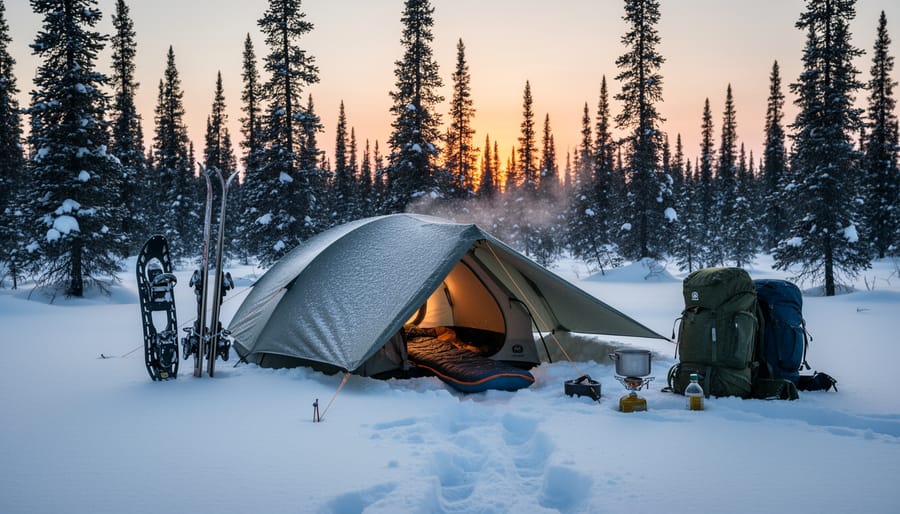
Northern Ontario’s winter transforms the landscape into genuine Arctic-like expedition territory, where temperatures regularly plummet to -30°C and colder. From November through April, even short distances demand trekking-level preparation, there’s no such thing as casual winter hiking in these conditions. You’ll navigate through deep snow using snowshoes or skis, deal with ice-covered trails, and contend with daylight that shrinks to barely six hours in December. The extreme cold turns equipment failures into life-threatening situations, and whiteout conditions can disorient even experienced outdoorspeople within minutes.
The most critical requirement isn’t gear, it’s experience. Prior competence on snow and ice is essential for winter travel in Northern Ontario’s near-Arctic climate. Without that foundation, no amount of expensive equipment makes these conditions safe. You need to understand snow stability, recognize frostbite warning signs, build emergency shelters, and navigate when landmarks disappear under snow. Winter here isn’t a season for learning; it’s territory for those who’ve already mastered cold-weather skills elsewhere and understand the risks of travelling through boreal wilderness when rescue could be days away.
Shoulder Seasons: Transition Challenges
Northern Ontario’s shoulder seasons, late April through early June and mid-September through October, blur the line between hiking and trekking in ways unique to near-Arctic conditions. What appears on a map as a straightforward day hike can transform into a survival situation when spring melt turns trails into knee-deep slush or October ice makes rock scrambles lethally slippery. The subarctic boreal forest transitions slowly here, meaning you’ll encounter winter conditions on north-facing slopes while south-facing sections remain clear.
During spring thaw, creek crossings that were frozen solid a week earlier become impassable torrents. Trail markers disappear under late snowdrifts or early snowfall. Fall freeze-up brings its own treachery: thin lake ice that looks solid, sudden temperature drops of twenty degrees overnight, and daylight that shrinks rapidly as you approach the solstice.
These months demand trekking-level preparation regardless of distance. Pack full cold-weather camping gear even for a day hike, because trail conditions may prevent your return on schedule. Bring navigation tools beyond your phone, extra food and fuel, and waterproof layers for rain that can shift to sleet within minutes. The Canadian Shield landscape doesn’t forgive casual approaches during transition periods.
Permits, Regulations, and Indigenous Territory Awareness
Venturing into Northern Ontario’s wilderness means crossing some of the most remote territory in Canada. Whether you’re planning a day hike or a multi-day trek, understanding permit requirements and respecting Indigenous lands is essential before you set foot on the trail.
For any overnight expedition, you’ll need proper authorization. A backcountry camping permit is mandatory for all overnight trips in provincial and national parks throughout the region. Ontario Parks and Parks Canada both enforce this requirement, and obtaining permits has become more accessible, you can secure them online through reservation systems or by phone. The process varies by jurisdiction, but backcountry camping permits generally include details about designated camping zones, group size limits, and seasonal restrictions specific to Northern Ontario’s conditions.
Here’s what you need to know about permits and protocols:
- Backcountry camping permits are required for all overnight stays in provincial and national parks
- Permits can be reserved online through Parks Canada and Ontario Parks systems or by calling designated reservation lines
- Day hiking typically doesn’t require permits unless accessing specific conservation areas
- Some remote areas may have self-registration systems at trailheads where online booking isn’t available
- Respect Indigenous protocols when crossing Treaty lands, even if formal permits aren’t required
Beyond official permits, there’s a deeper responsibility. Much of Northern Ontario’s wilderness exists within Treaty 9 and Treaty 3 territories, traditional lands of the Anishinaabe, Cree, and Oji-Cree peoples. These communities have stewarded these forests, lakes, and rivers for thousands of years. While some areas require specific permissions to access, all demand cultural sensitivity and awareness.
When planning routes through Indigenous territories, research whether you’re crossing reserve lands or areas of particular cultural significance. Sacred sites, seasonal hunting grounds, and culturally important locations deserve respect even when they’re not explicitly marked. Contact local First Nations offices if your route passes near communities, they can provide guidance on culturally sensitive travel and sometimes offer insights about conditions that no map will show you.
The distinction between hiking and trekking becomes especially relevant here. Day hikers using established trails in provincial parks face straightforward permit processes. Multi-day trekkers venturing into remote backcountry encounter more complex considerations, not just permits, but the responsibility of traveling as a respectful guest through lands with living cultural connections. Understanding these requirements isn’t bureaucratic red tape; it’s fundamental to responsible wilderness travel in Northern Ontario.
Gear Distinctions: Day Pack vs Multi-Day Load
The weight on your back tells the story before you take your first step. For a day hike through Northern Ontario’s boreal wilderness, you’ll carry 10 to 15 pounds, water, snacks, rain gear, a first-aid kit, map, compass, and a headlamp for the region’s shifting daylight hours. Even summer temperatures can drop sharply once you’re under the forest canopy, so pack an insulating layer and understand that weather moves fast across the Canadian Shield. A bear whistle and basic emergency shelter round out the essentials. That’s hiking.
Multi-day treks multiply everything. Your pack swells to 40 or 50 pounds, sometimes more if you’re heading deep into backcountry where resupply is impossible. You’re hauling a four-season tent rated for temperature swings, a sleeping bag suitable for near-freezing nights even in July, a stove and fuel, days of food, water purification, and navigation tools including topographic maps for unmarked routes. Bear-proof food storage becomes mandatory, canisters or rope systems, depending on regulations. Cold-weather camping gear isn’t optional here; Northern Ontario’s climate demands it.
Winter trekking raises the stakes further. Add insulated layers, vapor-barrier liners, expedition-grade shelter, extra fuel for melting snow, and specialized knowledge of ice and snow travel. The gear alone won’t save you without experience. Communication devices matter when you’re beyond cell service, which describes most of the region.
Respecting Indigenous culture means understanding that this land has supported people through harsh seasons for thousands of years, your gear list reflects their hard-won wisdom about preparation and respect for conditions that don’t forgive shortcuts. The divide between day pack and multi-day load mirrors the divide between sampling this landscape and committing to it fully.
Popular Hiking Trails vs Trekking Routes in Northern Ontario
Northern Ontario’s subarctic wilderness offers distinct choices between day hikes and multi-day trekking expeditions, each shaped by the region’s Canadian Shield bedrock, endless boreal forests, and sprawling lake systems. Understanding which trails suit a single day versus which demand full expedition commitment helps you match your adventure to your experience level and time.
Lake Superior Provincial Park delivers accessible hiking along dramatic shorelines where ancient Precambrian rock meets the world’s largest freshwater lake. The Coastal Trail segments between Agawa Bay and Chalfant Cove offer 4-8 kilometer stretches perfect for day exploration, with rocky headlands, cobble beaches, and glimpses of pictograph sites. Sleeping Giant Provincial Park near Thunder Bay provides similar day-hiking terrain, the Sea Lion Trail (3.5 kilometers) and Thunder Bay Lookout (1.5 kilometers) showcase the massive basalt bluffs and Lake Superior vistas without requiring overnight gear. These established paths feature marked routes, manageable distances, and proximity to parking areas where you can load lighter packing tips into effect without the burden of multi-day supplies.
| Trail Name | Type | Distance | Difficulty | Key Features |
|---|---|---|---|---|
| Coastal Trail (segments) | Hike | 4-8 km | Moderate | Lake Superior shoreline, pictographs, Shield rock |
| Sea Lion Trail | Hike | 3.5 km | Easy-Moderate | Basalt cliffs, Thunder Bay views |
| Pukaskwa Coastal Trail | Trek | 60 km | Challenging | Remote wilderness, backcountry camping, Shield terrain |
| Woodland Caribou routes | Trek | Variable | Expert | Pathless navigation, interconnected lakes, caribou habitat |
True trekking territory emerges in places like Pukaskwa National Park’s Coastal Trail, a 60-kilometer backcountry route that demands four to seven days of self-sufficiency. This expedition crosses rugged Canadian Shield headlands, river fords, and isolated campsites accessible only on foot, with no resupply points and limited escape routes. The boreal forest presses close to the Lake Superior shore, and weather can shift from calm to gale within hours. Woodland Caribou Provincial Park represents an even more remote trekking experience, a vast roadless wilderness of interconnected lakes where routes follow unmarked shorelines and ancient portages rather than established trails. Navigation requires topographic map skills, and encounters with moose, black bears, and woodland caribou are genuine possibilities in habitat where you may not see another person for days.
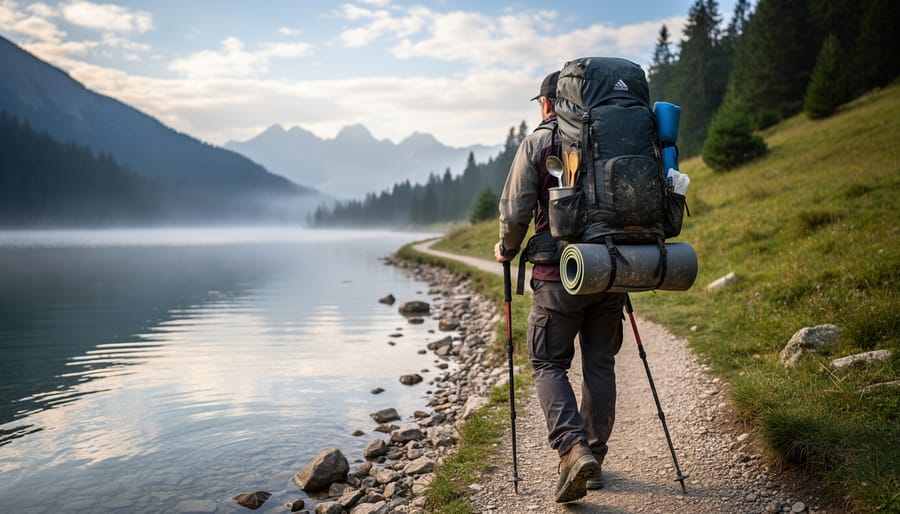
The difference becomes clear when you compare carrying a daypack with water and snacks versus shouldering a 30-kilogram load containing tent, sleeping bag rated for near-freezing nights, bear canister, stove, and five days of food. The boreal landscape rewards both approaches, quick strikes into accessible beauty and immersive multi-day journeys into true wilderness, but demands honest assessment of which commitment matches your capabilities and preparations.
Safety and Self-Sufficiency: The Critical Divide
The divide between hiking and trekking safety requirements becomes life-or-death serious in Northern Ontario’s subarctic wilderness, where conditions can shift from manageable to emergency-level in hours. Day hikers on established trails near Thunder Bay or Timmins maintain connection to infrastructure, cell service in some areas, marked routes, and the ability to retreat quickly if weather deteriorates. Multi-day trekkers venturing into the backcountry face prolonged isolation, communication blackouts, and self-rescue realities that demand a completely different preparation mindset.
Wildlife encounters illustrate this divide clearly. Hikers on day trips might spot a moose or black bear from a safe distance, retreat to their vehicle, and report the sighting to park staff. Trekkers camping for three nights in Woodland Caribou’s interior must secure all food in bear canisters, hang attractants properly, and know how to respond if a bear investigates their campsite at 2 a.m. with no ranger station within 50 kilometres. The protocol isn’t just awareness, it’s practiced competence in deterrence and response when you’re genuinely on your own.
Weather preparation separates casual from committed even more starkly. A day hiker caught in sudden rain gets wet and uncomfortable; a multi-day trekker with soaked gear faces hypothermia risk in temperatures that drop to freezing even in summer nights. Following Northern Ontario safety tips means carrying waterproof layers and emergency shelter regardless of trip length, but trekkers need redundant systems, backup fire-starting methods, complete clothing changes in waterproof bags, and the navigation skills to reach shelter if visibility crashes.
Winter conditions eliminate the middle ground entirely. Prior experience on snow and ice isn’t recommended for cold-season travel, it’s essential. Without it, no amount of expensive gear makes northern winter travel safe. Day hikers should stick to groomed trails near communities during limited daylight hours. Winter trekking requires demonstrated competence in avalanche awareness where terrain warrants it, cold-injury recognition, and emergency shelter construction.
Communication realities hit hard once you leave cell range. Most of Northern Ontario’s true backcountry offers zero phone service. Trekkers need satellite communication devices, detailed trip plans filed with contacts, and the judgment to turn back when conditions exceed their skill level. Basic adventurer safety applies to both activities, but trekking demands mastery where hiking requires only familiarity.
Sustainable Travel and Respecting the Land
Northern Ontario’s boreal wilderness requires a conservation ethic whether you’re out for a morning hike or a week-long trek. The slow-growing spruce, pine, and tamarack that blanket this landscape can take decades to recover from trampling, while the thin subarctic soils erode quickly under repeated foot traffic. Stick to established trails when they exist, and walk single file on unmarked routes to avoid widening impact zones across the fragile ground cover.
Leave No Trace principles take on heightened importance in these northern ecosystems. Pack out everything you pack in, including food scraps that won’t decompose in the short growing season. Use bear canisters or proper food hanging techniques to protect both wildlife and yourself. Human waste requires careful attention: bury it at least 15 centimeters deep and 70 meters from water sources, though frozen ground in shoulder seasons makes this challenging. In winter, pack out what you can’t bury.
Much of Northern Ontario’s backcountry sits on Treaty lands where Indigenous communities have stewarded these forests for thousands of years. Their traditional knowledge emphasizes taking only what you need and leaving ecosystems healthier than you found them. Respect nature by learning whose traditional territory you’re crossing and understanding that your presence is a privilege, not a right.
Woodland caribou, listed as threatened, depend on undisturbed old-growth boreal forest. Avoid calving areas in late spring and early summer, and never approach or follow these sensitive animals. Their populations can’t sustain additional stress from recreation pressure.
The northern landscape regenerates slowly. A single careless campfire scar or trampled moss bed can remain visible for years. Whether you’re hiking for three hours or trekking for three days, move through this powerful country with humility and care.
The distinction between hiking and trekking in Northern Ontario’s subarctic wilderness isn’t just semantic, it’s a matter of commitment, capability, and respect for one of Canada’s most unforgiving landscapes. Whether you’re planning a day hike along Thunder Bay’s coastal trails or a week-long trek through the remote boreal forests near the Arctic treeline, understanding this difference shapes your preparation, your safety, and ultimately your survival in conditions that shift from summer’s brief warmth to winter’s brutal cold.
Start honestly. The subarctic doesn’t forgive overconfidence or underprepared enthusiasm. If you’re new to northern wilderness travel, begin with established hiking trails in provincial parks where you can build skills without committing to multi-day self-sufficiency. Learn to read the land, understand how quickly weather changes near the Arctic influence, and develop the judgment that separates confident explorers from rescued ones. As your experience grows, particularly your comfort with cold, navigation, and isolation, you’ll know when you’re ready to transition from hiking to true trekking.
Both pursuits offer something profound in this vast territory. A single day hiking through old-growth boreal forest can shift your perspective as dramatically as a week-long trek across the Shield. The aurora dancing overhead, the silence broken only by loon calls across mirror-still lakes, the knowledge that you’re walking land that has sustained Indigenous peoples for thousands of years, these experiences don’t require a multi-day commitment to be transformative.
Northern Ontario’s subarctic wilderness will meet you exactly where you are, whether you carry a day pack or a full expedition load. The land asks only that you come prepared, travel respectfully, and recognize that out here, the distinction between hiking and trekking might just save your life.
